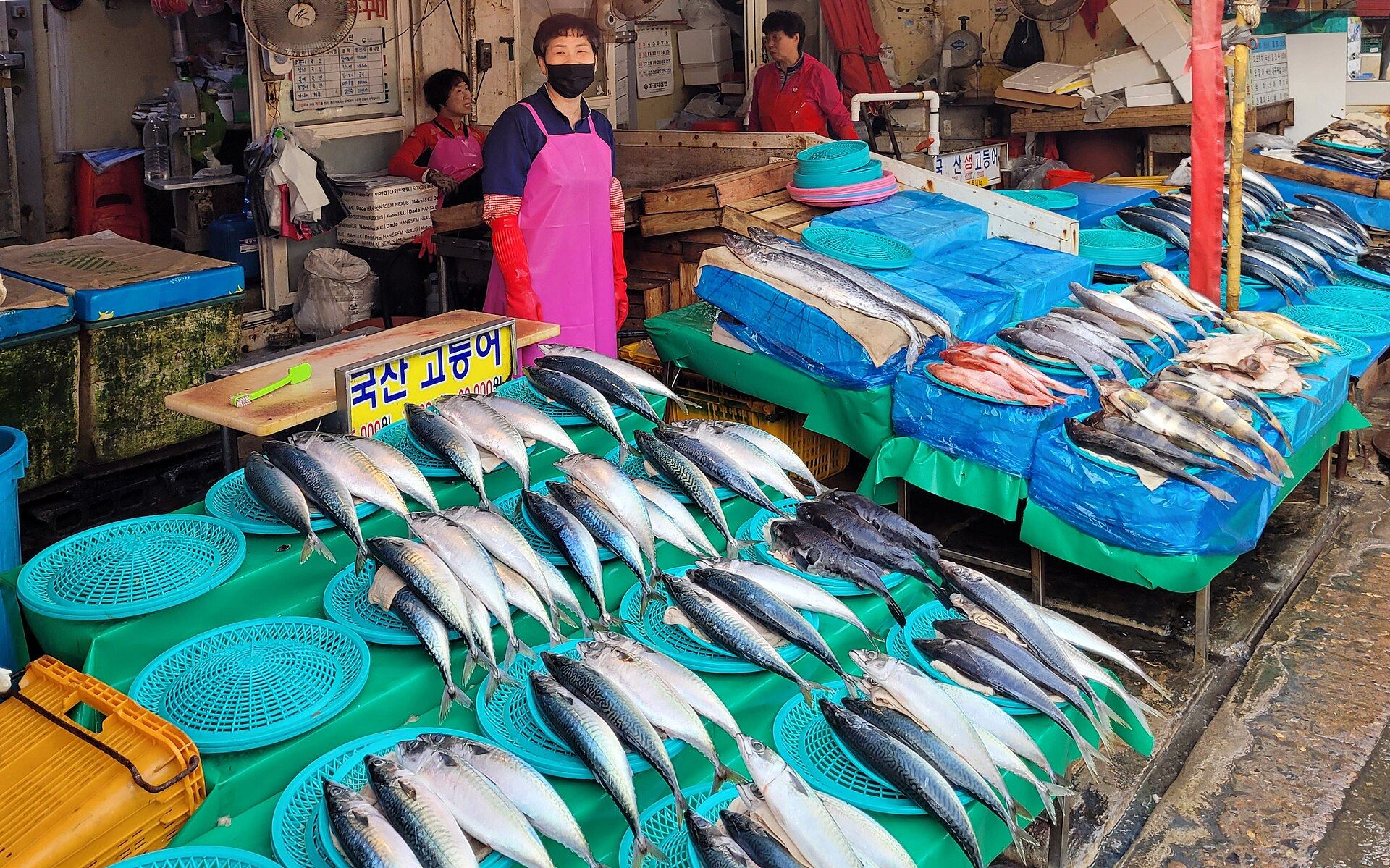
In this guide
Busan's food comes from its harbor and its history: seafood straight off the boats, and simple, filling dishes that spread through the city after the Korean War. This guide goes dish by dish, with the neighborhoods and markets where you will find each one. We name a restaurant only when Visit Busan or the Korea Tourism Organization has introduced it, and the order means nothing. Restaurants change, so look up any place before you go.
Dwaeji gukbap: pork and rice soup
This is the dish most closely tied to the city; the Korea Tourism Organization calls Busan the city of dwaeji gukbap. Broths come in two broad styles: clear, from cooking pork in water, and rich, from cooking pork with the bones. A bowl usually arrives with kimchi, salted shrimp and chives. Add the chives, taste the broth with a spoon, and then season it with salted shrimp or salt to your liking.
Seomyeon Local Food Street, the alley beside Seomyeon Market, is full of specialist restaurants, among them Songjeong Samdae Gukbap (송정3대국밥). Yangsanjip (양산집), near Kkangtong Market, is a small, long-running place where you may have to wait. In Suyeong-gu, the district around Gwangalli, the same organization introduces Anmok (안목), known for its pork-bone broth.
Milmyeon: Busan's wheat noodles
Milmyeon is said to have been created by refugees from the north during the Korean War. Mulmilmyeon comes in cold broth, and bibimmilmyeon is mixed with a spicy sauce. It is eaten mostly in summer, but you can look for it all year. Visit Busan's advice is to take a sip of the broth first and then add vinegar and mustard.
We have not named a restaurant here because we could not confirm one on the official pages. The Korea Tourism Organization lists milmyeon among the dishes at Gukje Market Food Street, and elsewhere you can simply look for the word 밀면 on a sign.
Market snacks: griddle cakes, fish cake and more
Gukje Market, Bupyeong Kkangtong Market and BIFF Square are all in Nampo-dong and close enough to walk between, so one afternoon can cover most of these.
- Ssiat hotteok: a griddle cake filled with sugar and seeds. Visit Busan places the original along BIFF Square in Nampo-dong.
- Eomuk: fish cake. Busan's version has a high fish content, which makes it chewy and savory. Try it at Bupyeong Kkangtong Market or in the food alleys of Gukje Market.
- Chungmu gimbap: small rice rolls served with sweet and sour squid salad, at Gukje Market Food Street.
- Bibim dangmyeon: spicy glass noodles, a Busan specialty you will find in the same alleys.
At the street stalls you sit on a small stool beside the counter, eat, and move on. That makes them one of the easiest places to eat alone.
Seafood by the water
Jagalchi Market
One of Korea's largest seafood markets. In the modern building, you choose live fish and seafood on the first floor and head upstairs, where it is served sliced raw or grilled. Outside, the older lanes of stalls under parasols are worth a walk even if you don't eat there.
Millak, near Gwangalli
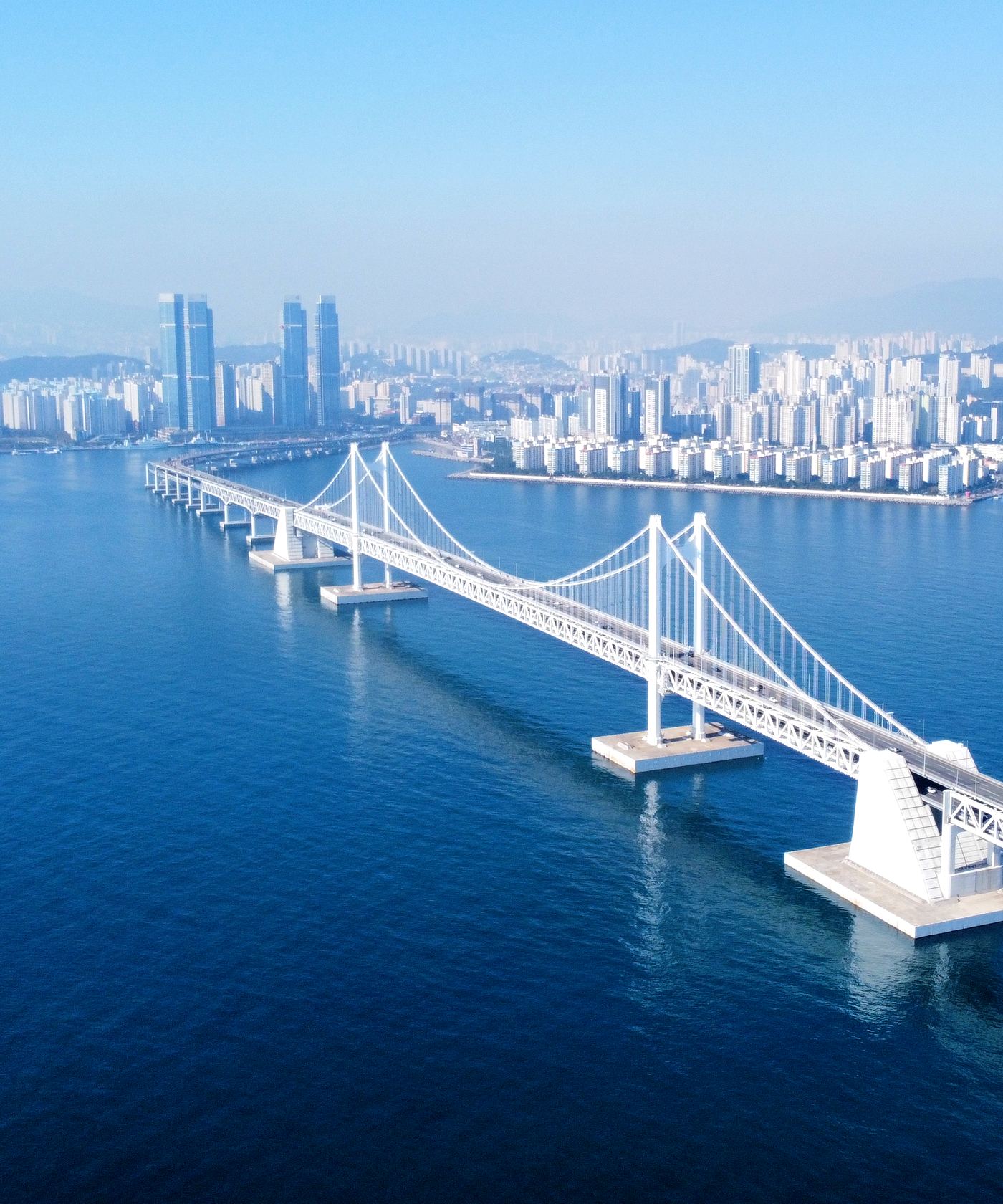
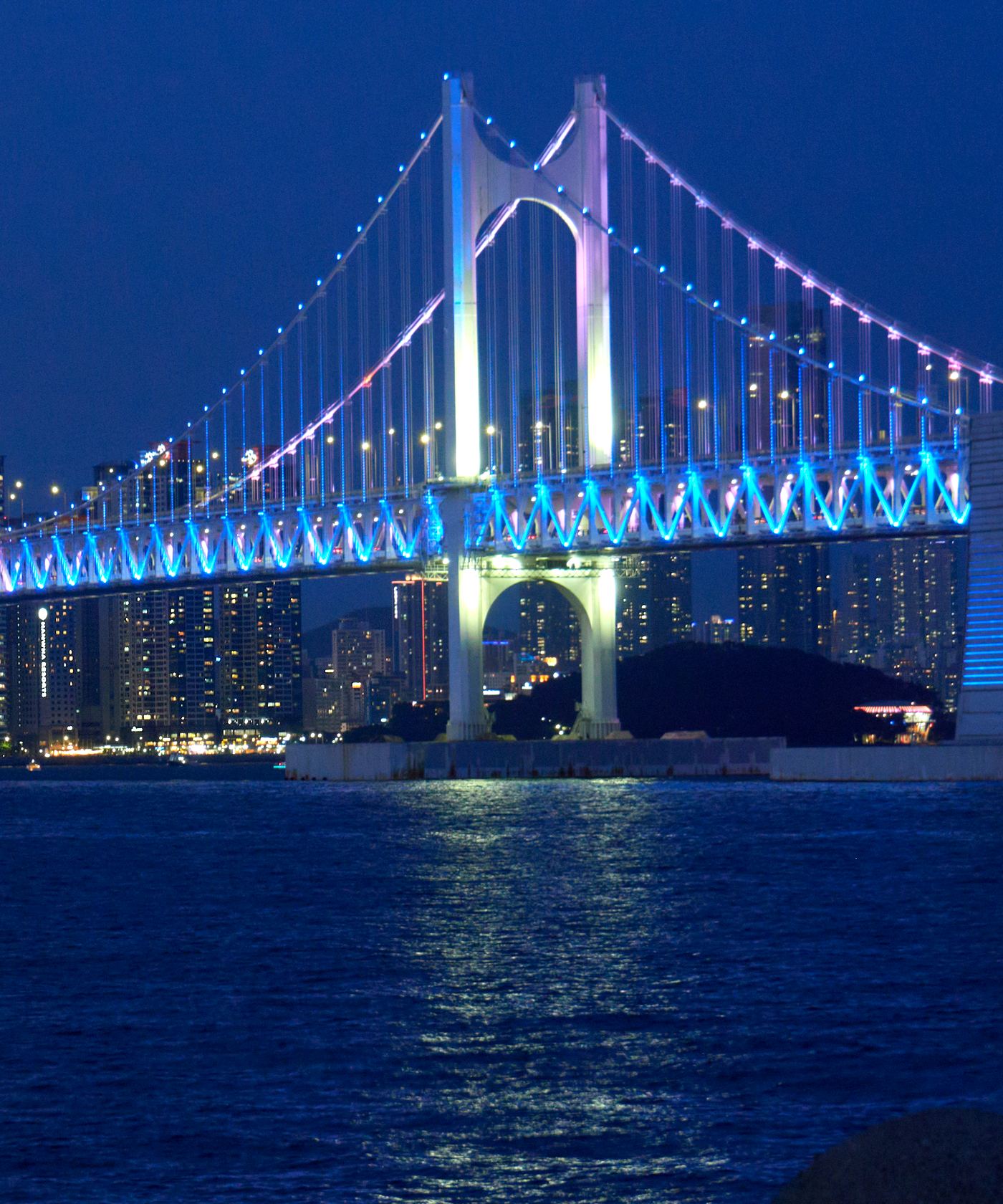
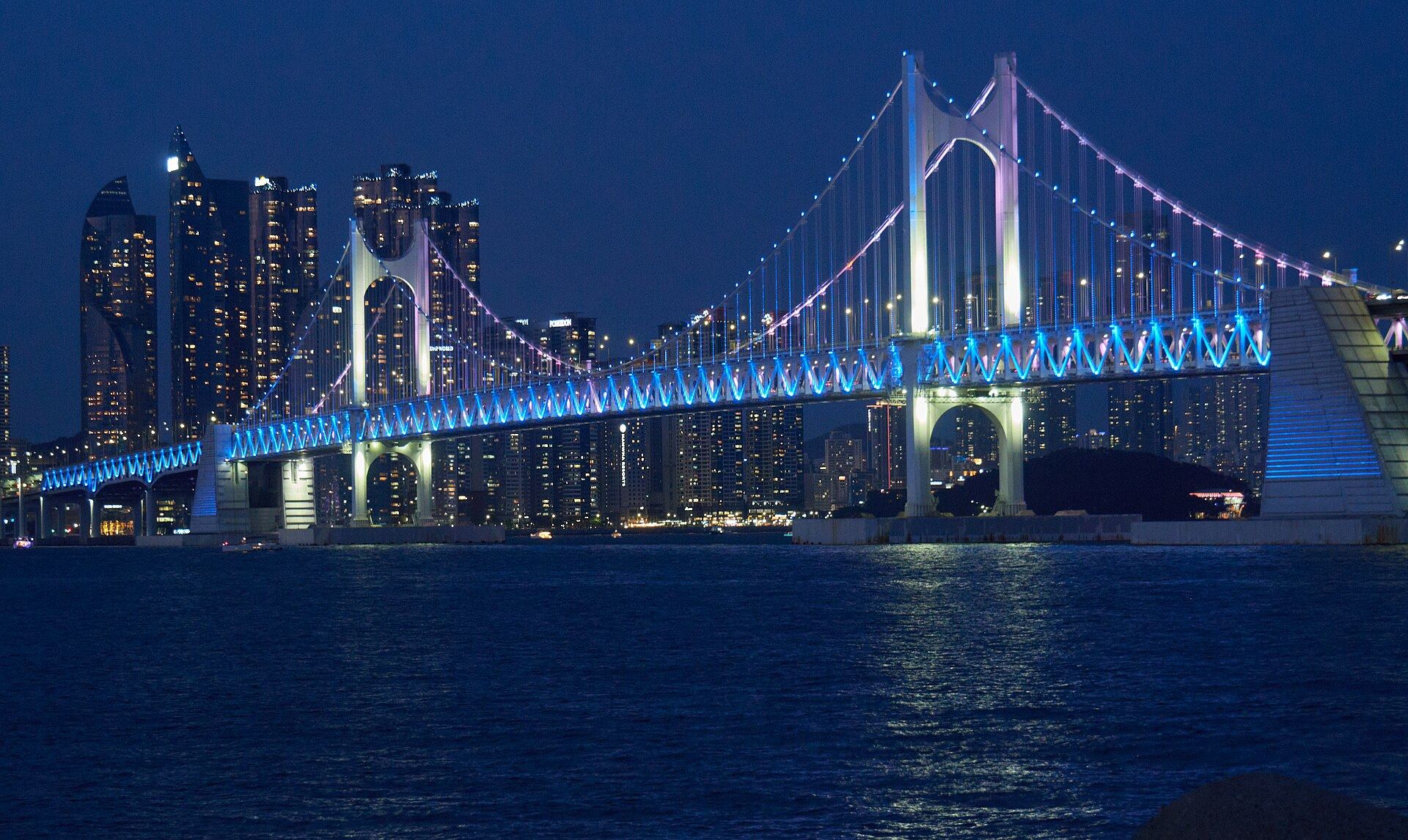
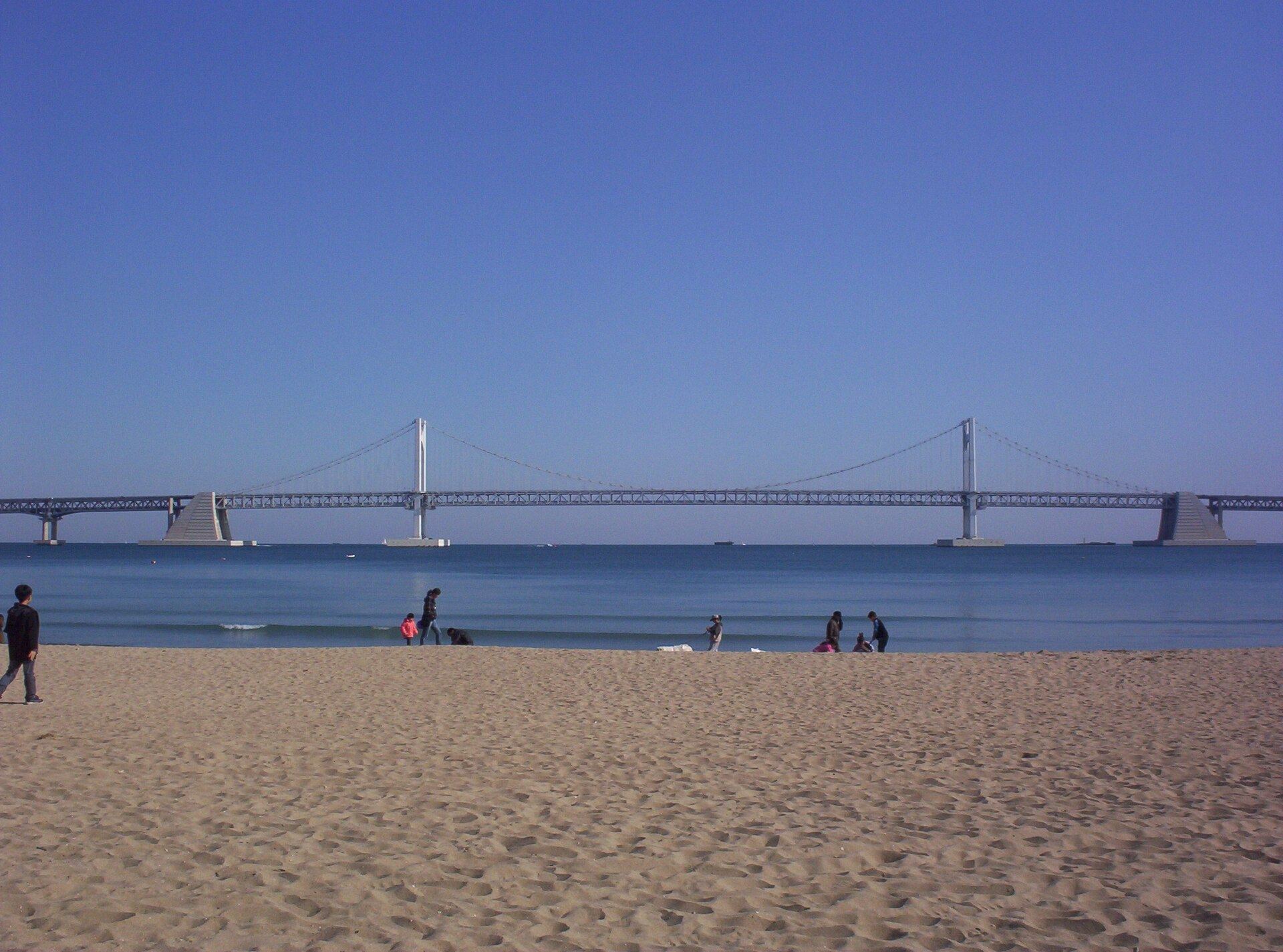
Millak Raw Fish Town works in a similar way, with fish sold on the first floor and restaurants on the second. The Korea Tourism Organization points out the views of Gwangan Bridge from restaurants in this area, so it is worth going around sunset.
Grilled shellfish at Cheongsapo
The small port of Cheongsapo sits on the Beach Train route. Visit Busan introduces Dohui Grilled Shellfish (도희네 조개구이) here, with grilled clams, grilled eel, raw fish and spicy soup, and windows looking out over the sea. The Daritdol Observatory is a minute's walk away, so the two make an easy pair.
Gomjangeo
Gomjangeo is Busan dialect for hagfish, usually translated on menus as sea eel. The Korea Tourism Organization says the grilled dish began in Busan. It is grilled on a gridiron and either lightly salted or coated in spicy chili paste. You will find it at Jagalchi Market, and in Gijang the organization introduces Haebyeonjipbul Gomjangeo (해변짚불곰장어), which grills it over a straw fire.
Nakgopsae
One more to try if you like spice: octopus, beef small intestine and shrimp stir-fried in a red sauce, then mixed with white rice. Visit Busan names it among the city's favorite foods for travelers.
Eating alone: how to choose
- Easiest: gukbap, milmyeon and market snacks come as a single bowl or a single item, so nobody needs to share anything with you.
- Harder: raw fish, grilled shellfish, gomjangeo and nakgopsae are often made for sharing, and some places may ask for two portions. It is fine to ask before you sit down: hanmyeong dwaeyo? (한 명 돼요?) means is one person okay?
- Look before you enter: counter seats, small tables and other people eating alone are all good signs.
- Go a little early or late: outside the main meal times, you are less likely to wait or feel rushed.
For what to do between meals, see our list of things to do in Busan, and for choosing a base near the food you like, our guide to where to stay. After a day of walking from market to market, a simple evening in your room is a good plan too; our notes on resting well on a Korea trip may help.