In this guide
Grilling meat at your own table is one of the most fun meals in Korea, and jokbal, braised pork trotters, is what many locals order for a relaxed evening. Neither needs much Korean. This guide explains how a Korean BBQ restaurant works, what to order, how to grill, and what to do if you are eating on your own. It is general advice rather than a restaurant list: we don't name places here, and every restaurant does things a little differently.
How a Korean BBQ restaurant works
Most tables have a grill set into the middle, heated by charcoal or gas, with an extractor hood or pipe above it. You order meat by the serving (1인분, il-inbun), staff bring it raw, and you cook it yourself. In some places staff grill it for you or help with the first round. Small side dishes (banchan) such as kimchi, salad, garlic and dipping sauces usually come with the meal, and in many restaurants you can ask for more.
- Look for the menu on the wall or a tablet on the table. Photos help, and menus in busy areas often have English.
- Prices are usually written per serving. Check whether a dish is per person or for the whole table.
- Water is often self-service from a fridge or dispenser. If you can't see it, ask for mul (물).
- Put your coat and bag in the basket or under the bench seat if there is one. Some places also give you an apron to keep smoke and splashes off your clothes.
What to order: pork, beef and lamb
Pork is the classic choice and usually the most affordable. Beef costs more, and lamb has its own specialist restaurants.
- Samgyeopsal (삼겹살): pork belly in thick strips, the best known BBQ cut.
- Moksal (목살): pork neck or shoulder, leaner and a little chewier.
- Galbi (갈비): ribs, pork or beef, often marinated in a sweet soy sauce. Marinated meat burns faster, so turn it often.
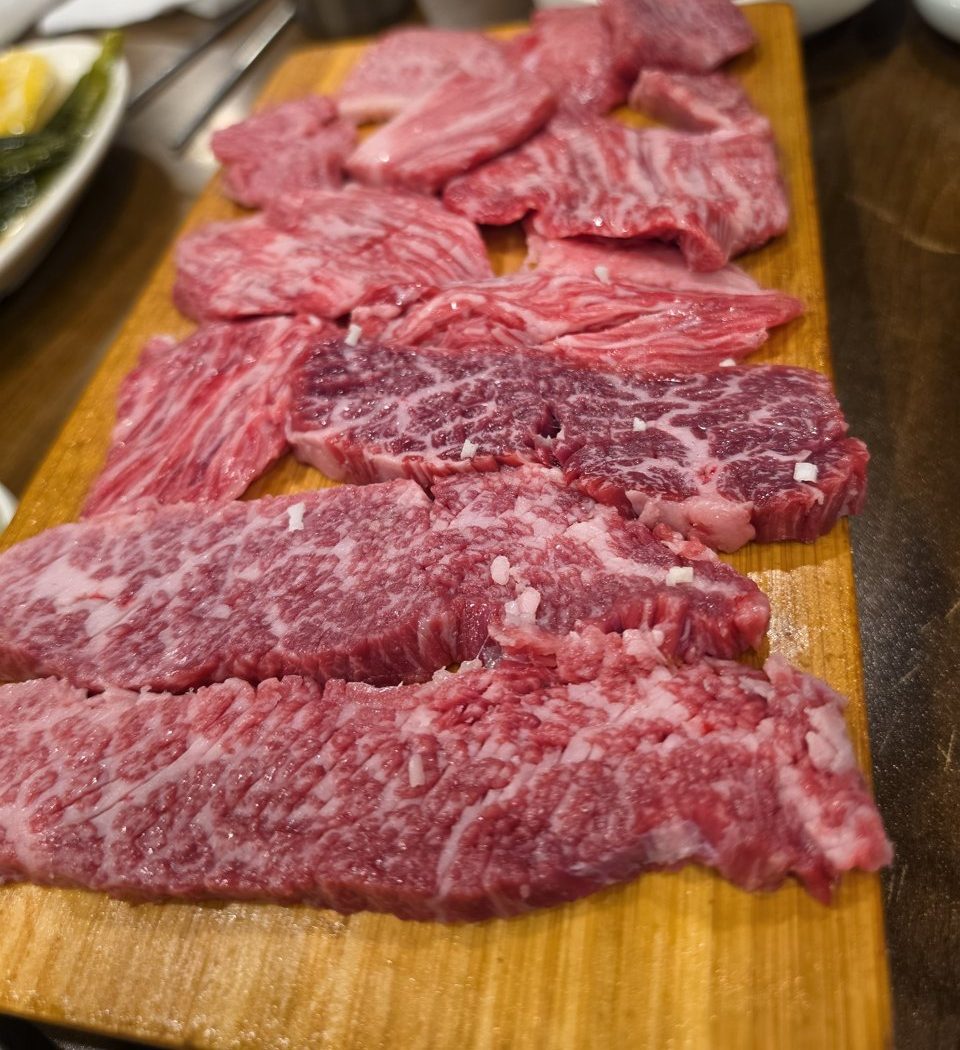
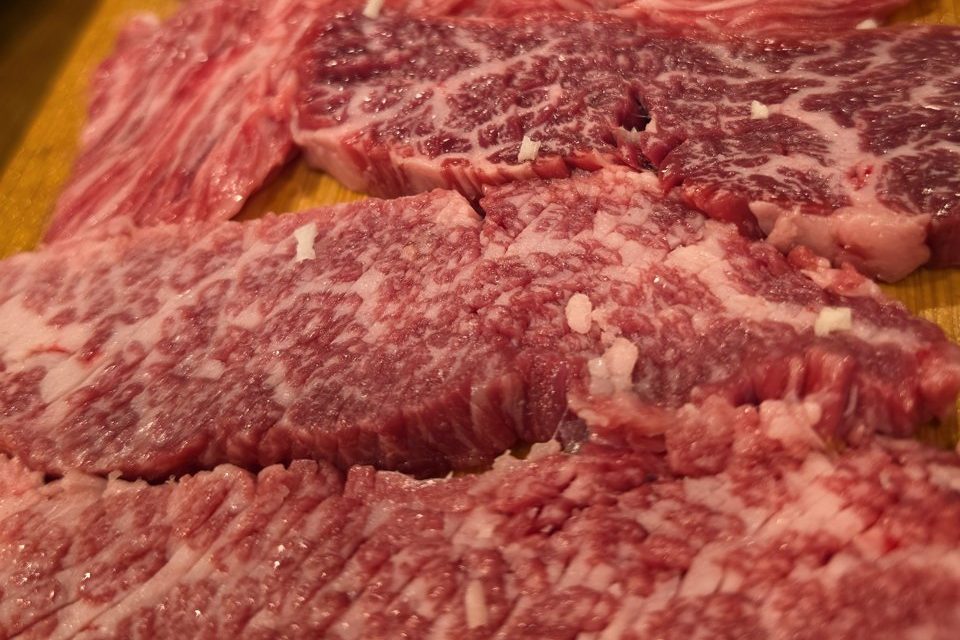
- Sogogi (소고기): beef. Hanwoo (한우) means Korean-raised beef, and the menu usually names the cut. Thin, marbled slices need only a short time on each side.
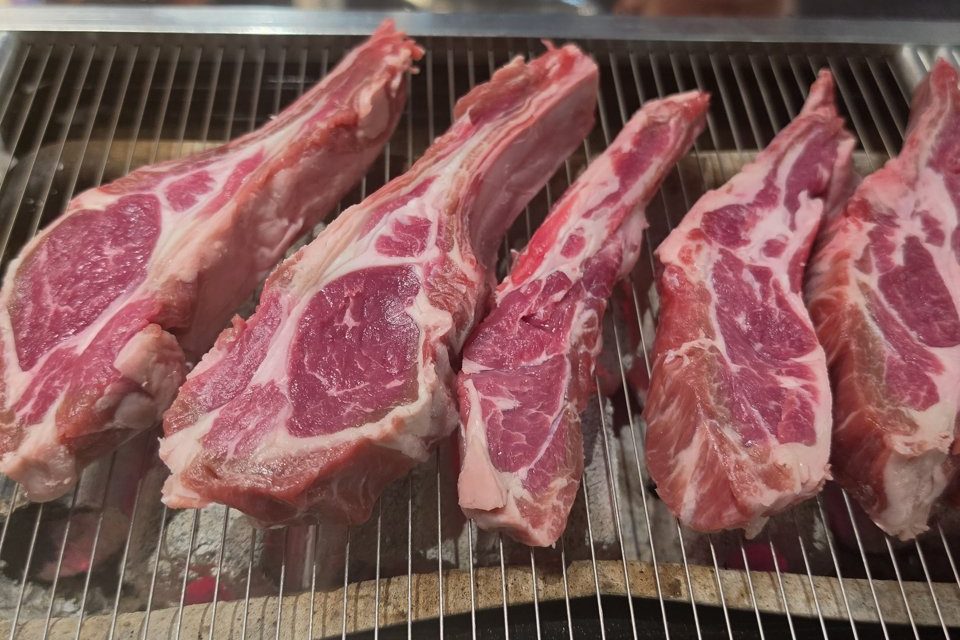
- Yanggalbi (양갈비): lamb ribs or chops. Lamb restaurants often serve a dry cumin and chili seasoning for dipping.
Many places expect at least two servings per table to start. If you are unsure, ask before you sit down. You can add more servings later, and many people finish with rice, noodles or a stew.
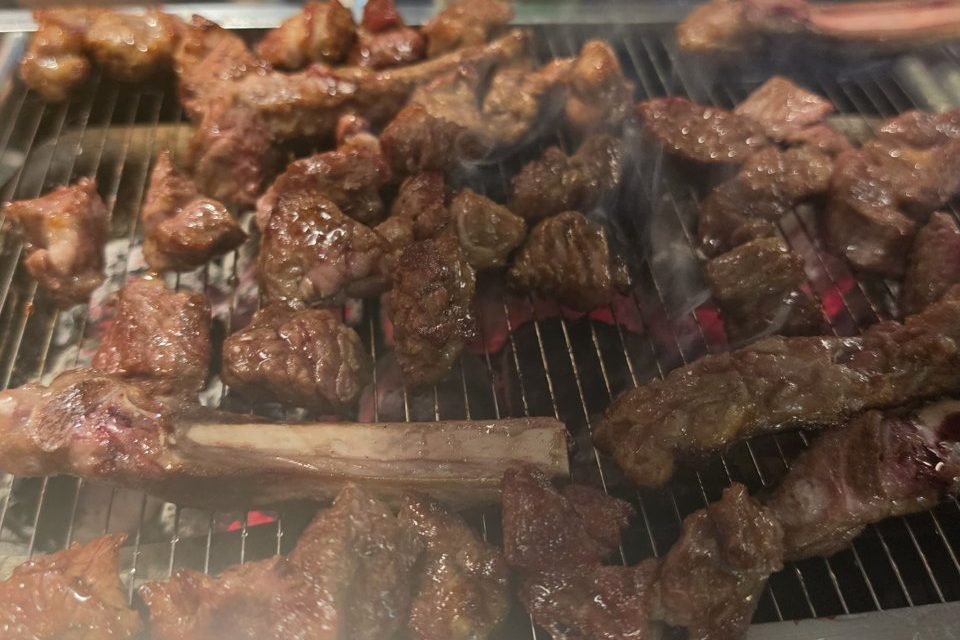
How to grill and eat it
- Let the grill heat up first, then lay the meat flat without crowding it.
- Turn it once the bottom has browned. Pork should be cooked through with no pink left; beef can be eaten pinker if you like it that way.
- Cut it into bite-size pieces with the scissors on the table. Scissors at the table are completely normal in Korea.
- Move cooked pieces to the edge of the grill, where it is cooler, so they don't burn.
- If the grill gets black and sticky, ask staff to change it: bulpan bakkwo juseyo (불판 바꿔 주세요).
Then make a ssam, a lettuce wrap: put a piece of meat on a lettuce or perilla leaf, add a little ssamjang (a thick soybean and chili paste) and a slice of garlic or green chili if you like, fold it and eat it in one bite. Sesame oil with salt and pepper is the usual dip for plain pork and beef.
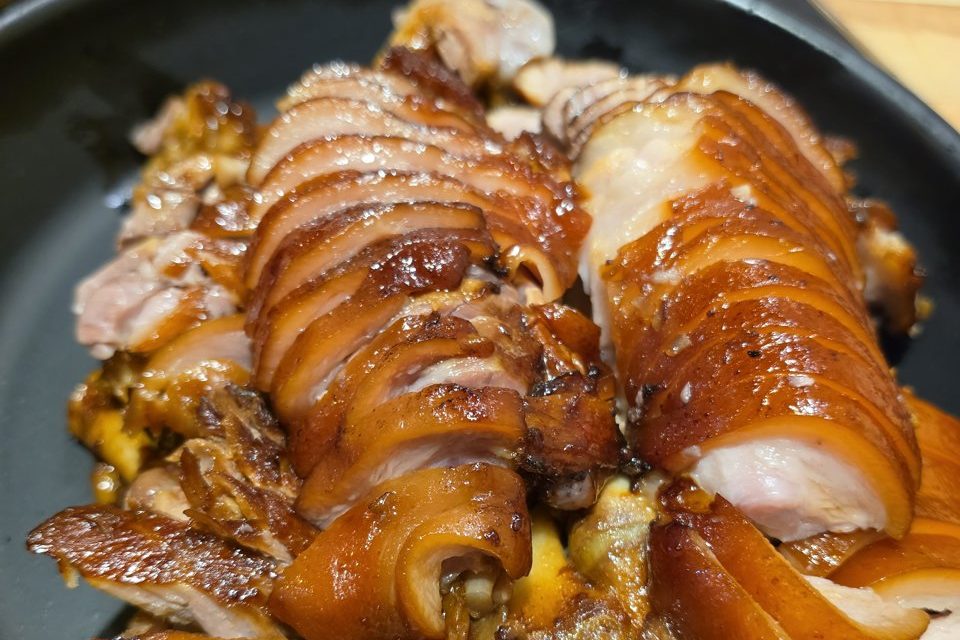
Jokbal: braised pork trotters
Jokbal is pork trotter simmered for a long time in soy sauce with spices, then cooled and sliced. It is served at room temperature, so there is no grill and nothing to cook, which makes it an easy choice on a tired evening. The skin is soft and slightly sticky and the meat inside is tender.
It usually comes with lettuce, salted shrimp (saeujeot) for dipping, garlic and chili. Some places also offer a spicy version or a mixed platter, and many sell it for takeaway, so you can eat it in your room. A cold version is closely linked with Busan: naengchae jokbal, sliced jokbal tossed with vegetables and a mustard dressing, best known from the jokbal alley in Bupyeong-dong, near Nampo-dong.
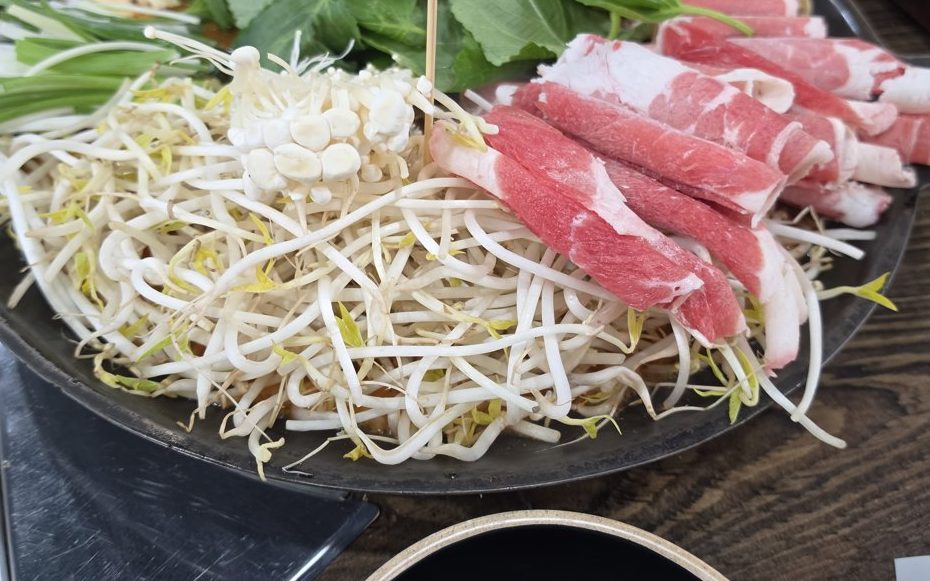
Hot pots and how the meal ends
Not every meat meal is grilled. Many restaurants serve a shallow hot pot cooked at the table: thinly sliced meat, bean sprouts, mushrooms, greens and tofu go into a pan with broth, and you eat as it cooks. Like BBQ, a hot pot is usually ordered for two or more.
At the end of a BBQ or hot pot meal, Koreans often order something to finish: fried rice made in the same pan (bokkeumbap), cold noodles (naengmyeon), or a stew such as doenjang jjigae with rice. If you are already full, it is fine to skip it.
Eating on your own
- BBQ and hot pots are made for sharing, so a two-serving minimum is common. Ask first: hanmyeong dwaeyo? (한 명 돼요?) means is one person okay?
- Easier solo options: jokbal to take away, restaurants with counter seats, or lunch set menus that include grilled meat with rice.
- Smoke and smell: the smell stays on clothes and hair. Wear something you don't mind, and use the apron or bag cover if one is offered.
- Drinks: soju and beer are common with BBQ, but nobody has to drink. Soft drinks and water are always fine.
- You usually pay at the counter on the way out, and tipping isn't expected in Korea.
For more of the city's dishes, see what to eat in Busan, and for choosing a neighborhood, where to stay in Busan. A long dinner after a day on your feet is a good moment to slow down, and our notes on resting well on a Korea trip may help.