In this guide
Jeju looks small on a map, but getting across it takes longer than most visitors expect. There is no subway or train on the island, so you either drive or ride the bus. This plan gives each day one side of the island, east, then west, then south, and moves your bags once: one night in Jeju City, one night in Jungmun or Seogwipo.
Before you go: car or bus?
- With a car: tourists can drive on a valid International Driving Permit issued in their home country, which must be a Geneva or Vienna Convention member. Rental staff will ask for the permit and your passport, and may ask for your own license too.
- With the bus: buy a T-money card at a major convenience store, because some routes don't take cash.
- Timing: buses generally run from about 6 a.m. to about 10 p.m., but away from the cities VisitJeju warns of waits of an hour or more. Naver Map and KakaoMap show live arrivals.
Day 1: the east (Seongsan Ilchulbong, Udo, Manjanggul)
Morning: Seongsan Ilchulbong
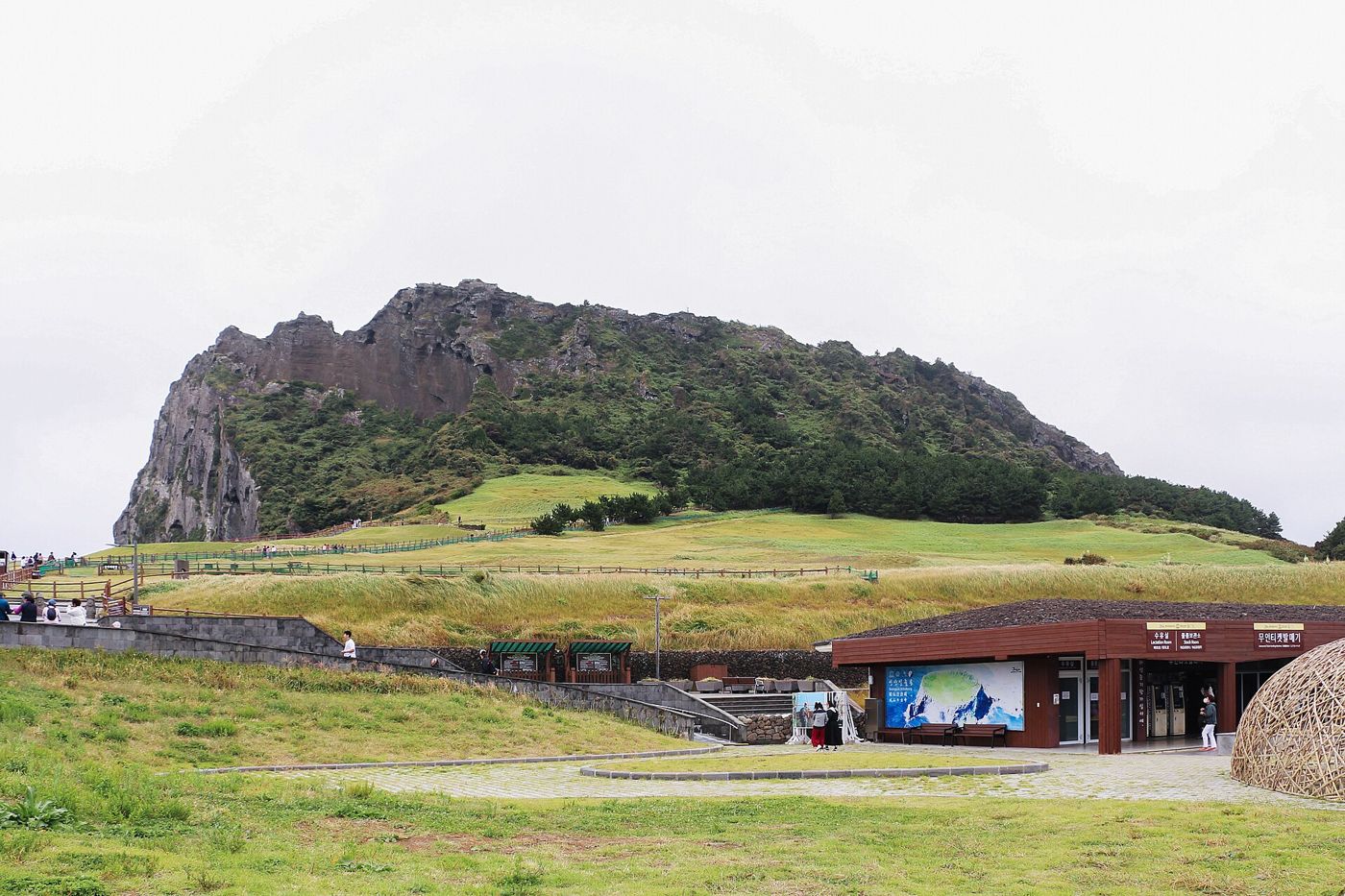
Start early at this volcanic tuff cone, which rises about 180 m from the sea and is part of Jeju's UNESCO World Natural Heritage. The paid path to the crater rim takes about 30 to 40 minutes of stairs and slopes; a free path stays low along the shore. It closes on the first Monday of each month, or the following day if that Monday is a holiday. By bus, express 111 runs from the airport to Seongsan Port, and bus 201 from Jeju Bus Terminal stops at the cone after about 1 hour 45 minutes.
Midday: the ferry to Udo
From Seongsan Port the crossing takes about 15 minutes. Carry your passport for the ferry paperwork. Sailings depend on the weather, so check the last ferry when you arrive. Outside vehicles are restricted on Udo until July 31, 2029, with exceptions such as certain electric rentals, so plan to leave the car on the Jeju side. The island is about 17 km around, and VisitJeju suggests three to four hours for one or two main sights and a café. Look for Seobin Baeksa, whose white grains are hardened red algae rather than sand, the wide shore of Hagosudong and the climb up Udobong. Many people get around by rented bicycle.
Late afternoon: Manjanggul Lava Tube
Manjanggul lies on the north coast, on the way back to Jeju City. It reopened on May 30, 2026 after more than two years of work following a rockfall, so older guides may call it closed. Visitors enter at Entrance 2 and walk about 1 km to a lava column some 7.6 m high. Wear closed shoes. It is closed on the first Wednesday of each month, and entry stops in the late afternoon. Without a car, ride to Gimnyeong on bus 101 or 201, then change to bus 711-1 or 711-2.
Day 2: the west (Hyeopjae, O'sulloc)
Morning: along the northwest coast
Check out of your Jeju City hotel and take bus 202 from Jeju Bus Terminal; the Hyeopjae Beach stop is about 1 hour 15 minutes away. Hyeopjae has shallow water and a pine grove, it runs into neighboring Geumneung Beach, and it looks out to the small island of Biyangdo.
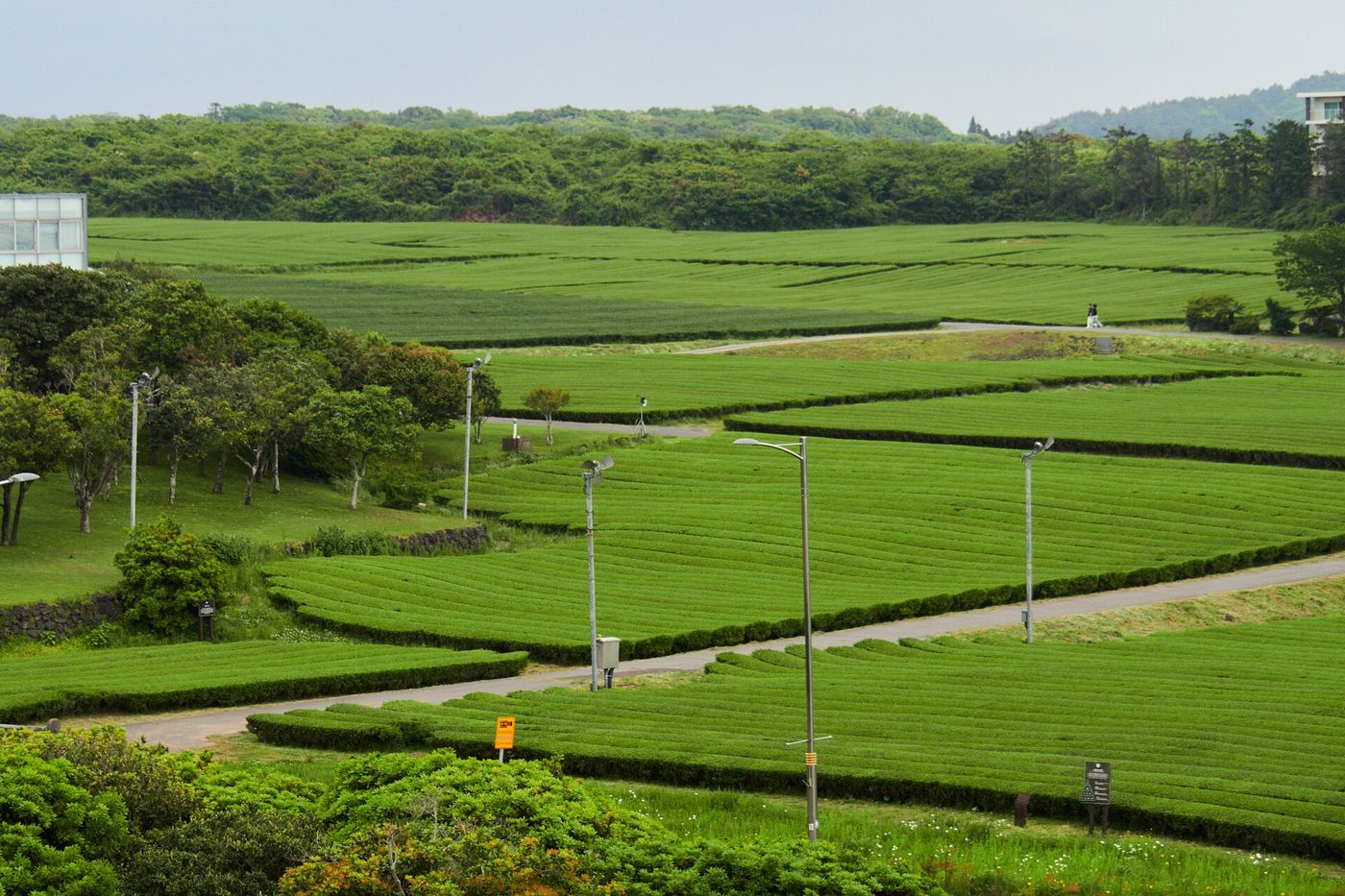
Afternoon: O'sulloc tea fields
O'sulloc's own directions list buses 784-1 and 784-2 from Hallim, passing Hyeopjae Beach, to the O'sulloc stop. The site combines tea fields with a tea museum and tea house, and it is a pleasant place to slow down after the beach.
Evening: south to Jungmun
From O'sulloc, return to Donggwang Transfer Center and take bus 282 toward Seogwipo, which runs through Jungmun. Sleep in Jungmun or Seogwipo tonight.
Day 3: the south (Jungmun, the Olle Trail, Seogwipo)
Morning: Jusangjeolli and Cheonjeyeon
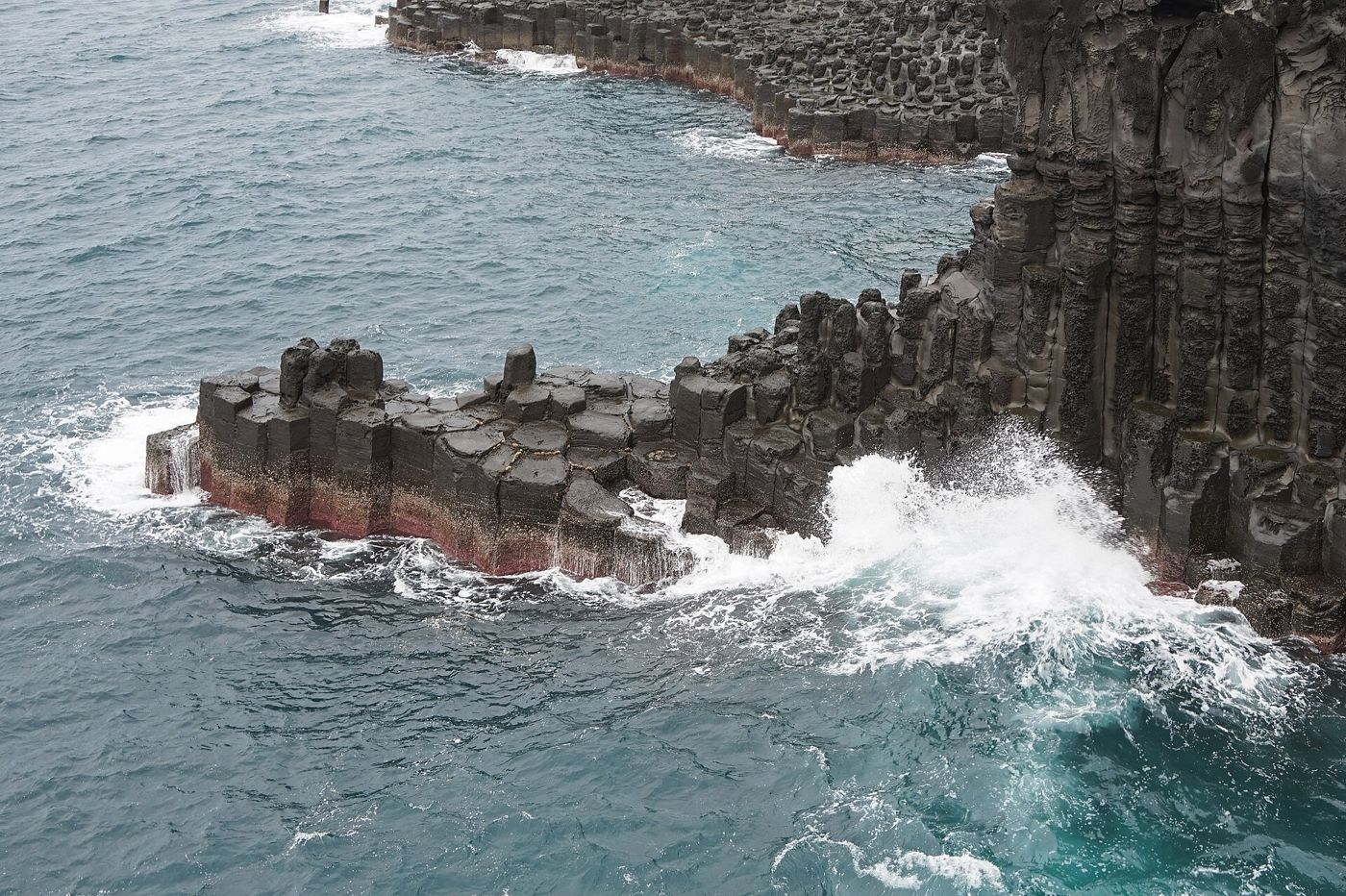
Daepo Jusangjeolli is a wall of basalt columns about 30 to 40 m high and about 1 km long, formed as thick lava cooled. Cheonjeyeon Falls, inside the Jungmun Tourist Complex, has three tiers linked by a path, although VisitJeju notes that the first tier only flows after rain.
Midday: a stretch of the Olle Trail
Olle Route 7 runs about 14.7 km between Oedolgae and Wolpyeong and takes four to five hours, so most visitors with one day here walk just a section. From Seogwipo Bus Terminal, bus 201 reaches the Sammaebong stop for the Oedolgae sea stack in about 15 minutes. Buses 202 and 600 both link Jungmun with central Seogwipo.
Afternoon: waterfalls and the market
Jeongbang Falls, about 23 m high, drops straight into the sea at the end of a short stairway. Just over 2 km away, Cheonjiyeon Falls sits at the end of a walk of about 1 km up a valley, and it stays open into the evening. Between them, Seogwipo Maeil Olle Market is open all year, though each stall keeps its own hours.
Getting back to the airport
Airport limousine 600 runs from Seogwipo through Jungmun to Jeju Airport and has luggage space.
If the weather turns
Don't force it: swap in an indoor stop from our one-day Jeju routes, which include rainy-day alternatives for both sides of the island.
Small things that help
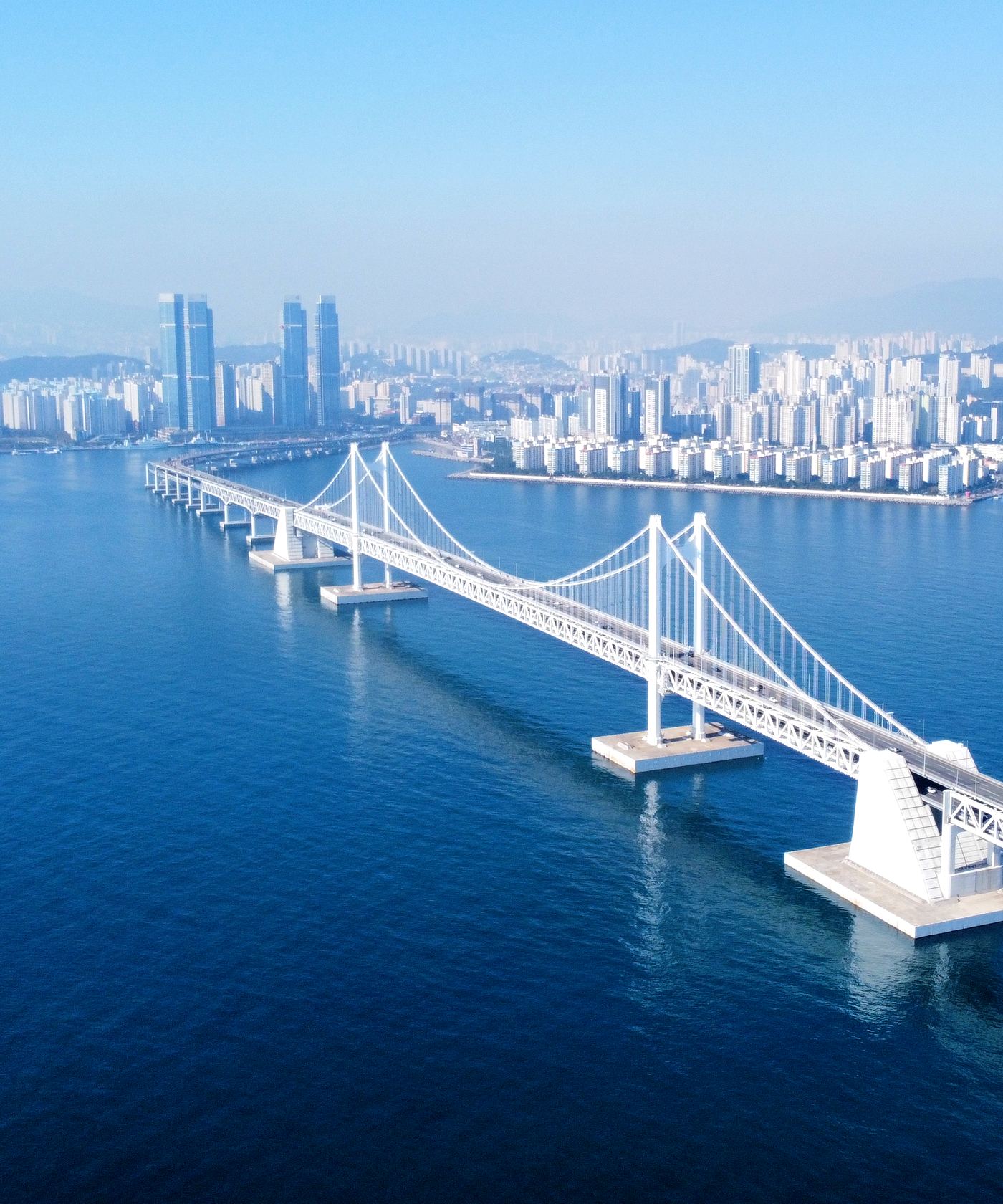
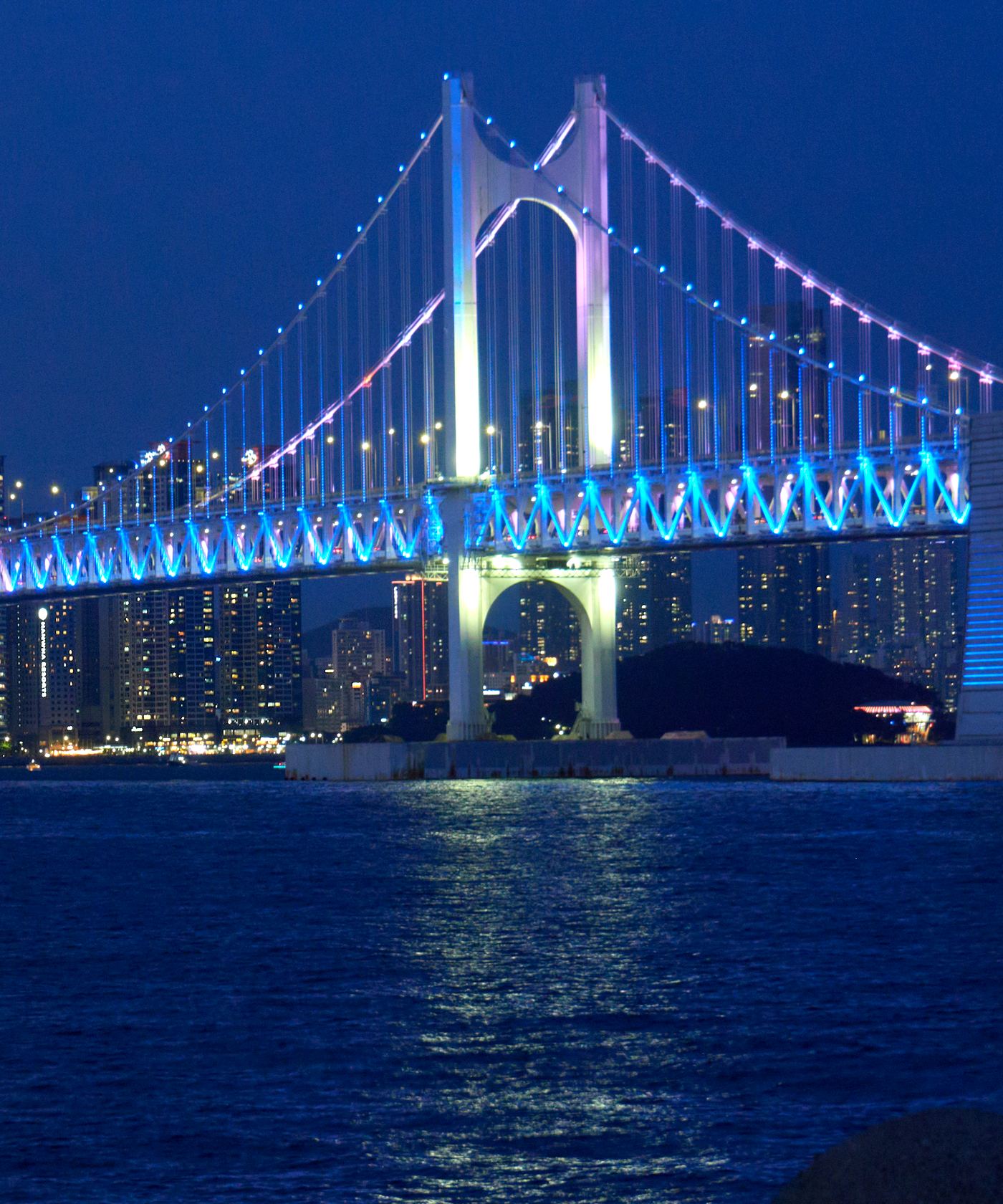
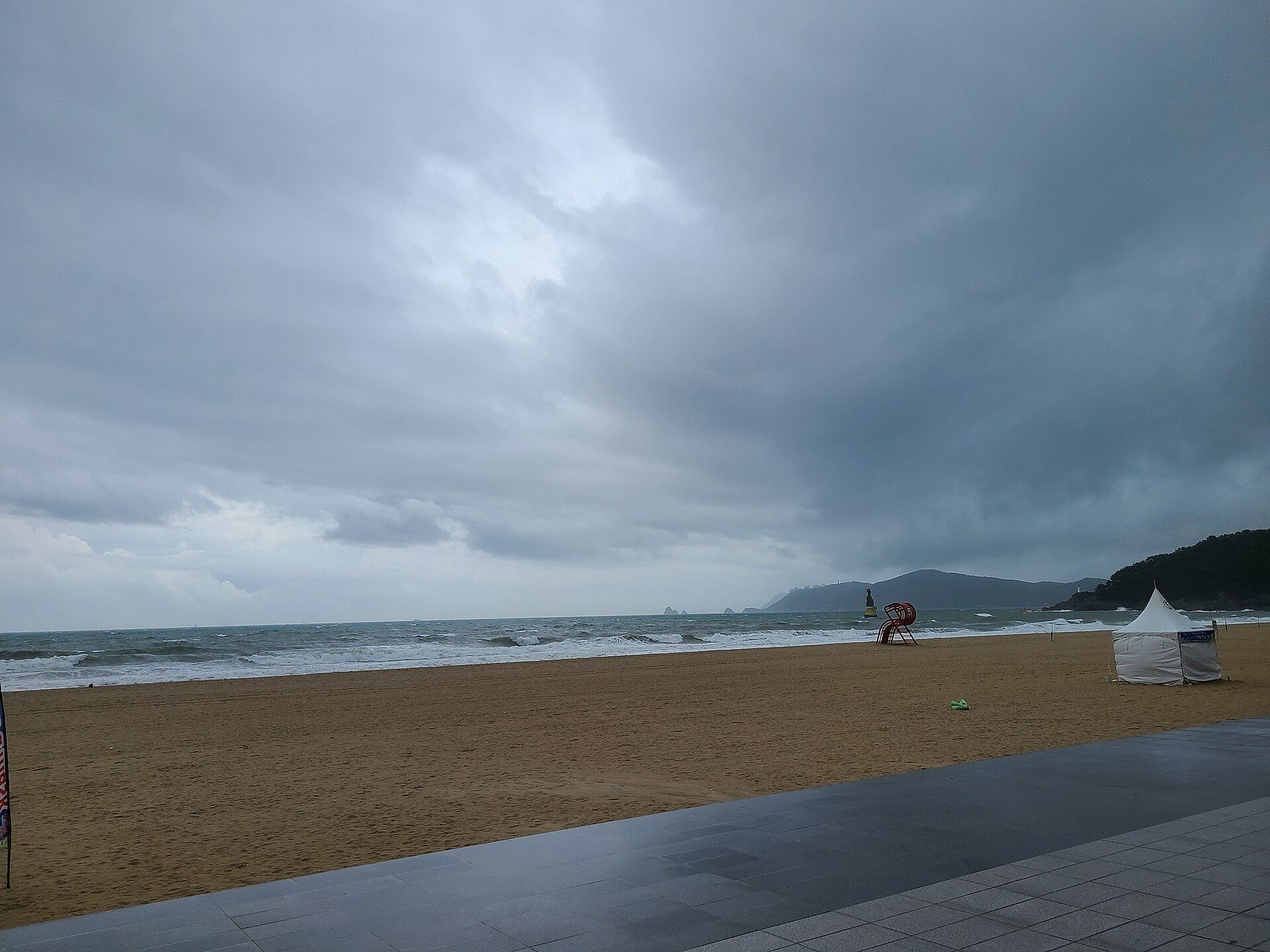
- Jeju fits well with a longer trip; see three days in Seoul and three days in Busan.
- Keep your last evening quiet at your hotel; our notes on resting well on a Korea trip may help.