In this guide
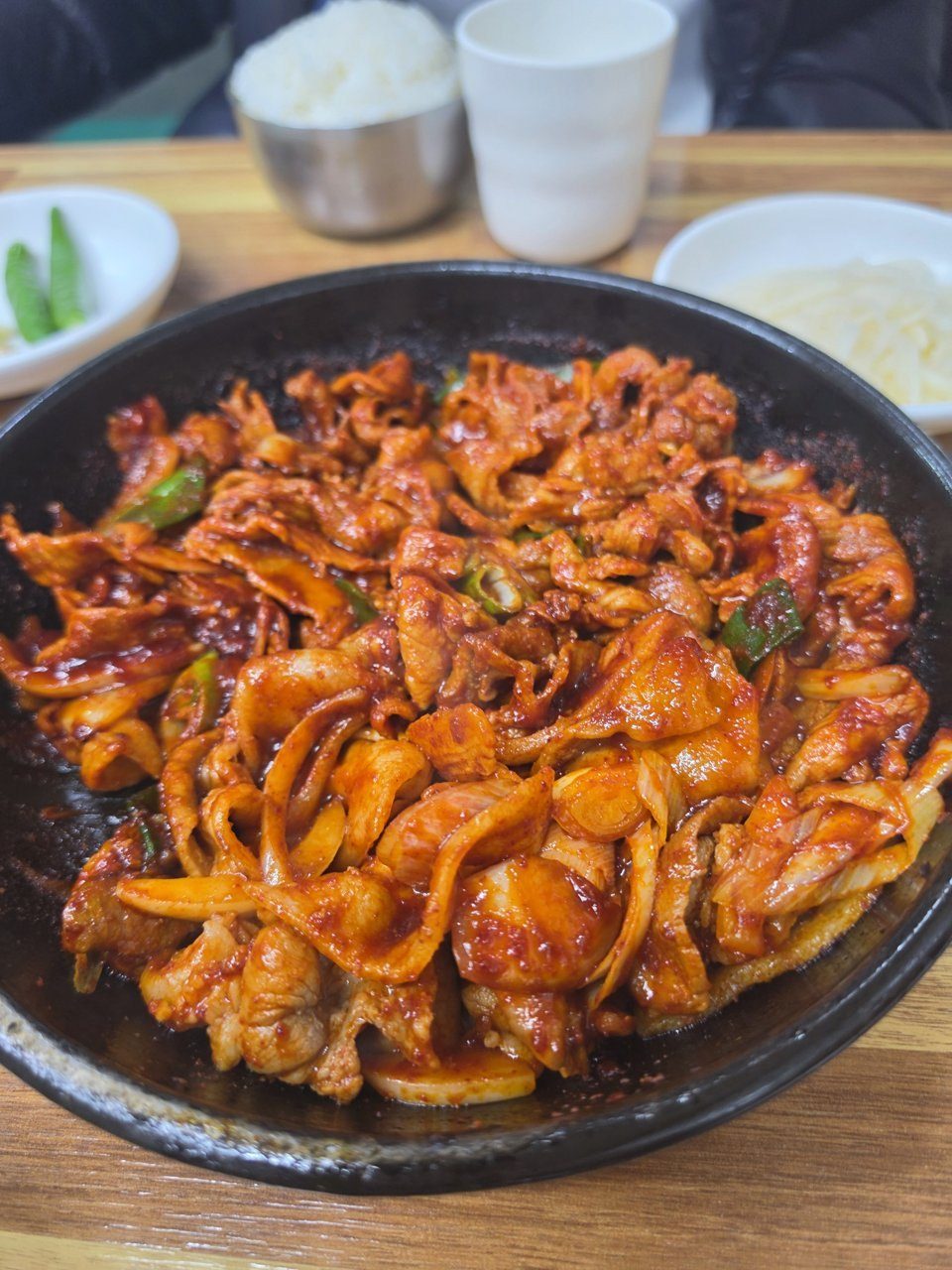
A black pan piled with glossy red pork, soft onions and slices of green onion, a steel bowl of rice behind it and small plates of side dishes on the edge of the table. This is jeyuk bokkeum, one of the most ordinary and most loved meals in Korea. It is not a special-occasion dish, just a hot, filling plate that office workers, taxi drivers and students eat at lunch every day. For a woman travelling alone in Busan, that ordinariness is exactly what makes it so useful.
What Jeyuk Bokkeum Is
The name roughly means stir-fried pork. Thin slices of pork, often from the shoulder or belly, are coated in a sauce built on gochujang (red chilli paste) and gochugaru (chilli flakes), usually with garlic, ginger, soy sauce and a little sweetness. Onion, green onion and sometimes cabbage or carrot are cooked together with the meat until the sauce turns sticky and caramelised at the edges.
The flavour is spicy, sweet and savoury at once. Most versions sit at a medium heat for Korean palates, which can feel quite hot if you are not used to chilli. Rice is the essential partner: the plain grains soften the spice and soak up the sauce.
In many restaurants the dish arrives on a hot iron plate or pan, still sizzling. Other places serve it on a regular plate as part of a set meal. Either way, it is a dish built for one person to eat with a bowl of rice, which is not true of every Korean meal.
Why It Works When You Eat Alone
Many famous Korean dishes, such as barbecue, hot pots and some stews, are designed for sharing and are sometimes sold only in portions for two or more. Jeyuk bokkeum is different. It is a standard single-person order at casual Korean restaurants, home-style set-meal places and lunch spots near offices and markets.
Look for small, busy restaurants around Seomyeon, Nampo-dong, near subway stations or close to traditional markets, especially between about 11:30 and 1:30 on weekdays when locals eat lunch. A full room of people eating alone at their own tables is a good sign, and you will not feel out of place. Some menus list it as jeyuk deopbap (over rice) or as part of a set with soup. A few restaurants still have a two-portion minimum, so check the menu or ask before sitting down.
If you are curious about grilling meat at the table later in your trip, our guide to Korean BBQ and jokbal in Busan explains how ordering for one works there.
How to Order and Eat It
Ordering is simple. Point at the menu or say the name, and hold up one finger. Many places now use a table tablet or a kiosk by the door, often with pictures, and cards are accepted almost everywhere. To call staff, use the bell on the table if there is one, or say "jeogiyo" in a friendly voice.
- Side dishes (banchan) come free and are usually refillable. Kimchi, pickled radish, seasoned greens or raw green chillies are common.
- Water is often self-service from a dispenser or a jug on the table, with cups stacked nearby.
- Rice usually arrives in a covered steel bowl. Some people spoon pork onto the rice; others mix it all together.
- If lettuce or perilla leaves are served, wrap a bite of pork and rice in a leaf for a fresher mouthful.
- Use the spoon for rice and soup and chopsticks for meat and side dishes. Leaving the pan a little messy is completely normal.
If you are worried about the heat, you can ask whether they can make it less spicy by saying "deol maepge". Many kitchens pre-mix the sauce, so this is not always possible, but a cold drink, plain rice and mild side dishes will help. Raw green chillies on the side can be much hotter than they look, so take a careful first bite.
Fitting It Into a Busan Day
Jeyuk bokkeum is an ideal midday refuel between sights. It comes out fast, keeps you full through an afternoon of hills, stairs and beach walks, and leaves you free to save a bigger dinner for seafood or barbecue. For more dishes to put on your list, see What to Eat in Busan.
The smell of chilli sauce clings a little to clothes and hair, so it pairs well with a walk outside afterwards. A stroll along the waterfront or through a market lets you settle into the afternoon before your next stop.
By evening, a day like this can catch up with you. After a lunch eaten on the go and hours on foot, your legs may feel heavy and your shoulders stiff from carrying a bag around all day, and a quiet hotel room alone does not always make it easy to switch off. On nights like that, it is nice to imagine some calm body care right there in your room.
Small Tips for Solo Women
- Casual lunch restaurants are relaxed and practical; eating alone is common and nobody will rush or stare.
- Go slightly before or after the noon rush if you want a table without queuing.
- Tipping is not expected in Korea, so pay the amount shown at the counter or by the door.
- Carry tissues or wet wipes; red sauce and white tops are not friends.
- Keep a translation app handy for menus without pictures, and photograph dish names you enjoy so you can order them again.
Tired after a long day of travel?
If a full day of walking around Busan has left you worn out, a quiet hour of women-only aroma body care in your hotel room is one way to end the day. TODAK is for women guests only, and our therapists are men who provide professional body care only. Please message us in advance — there is no deposit, and you pay in cash (Korean won) on the day.