In this guide
Few meals feel as comforting after a long day in Busan as a stew that arrives still boiling at the table. Korean stews, called jjigae, are everyday food: cheap, filling, quick, and very often served in single portions. That makes them one of the easiest meals for a woman eating alone.
This guide covers what to expect when you order a stew or a shared-style stir-fry, how the table works, and a few small habits that make solo dining relaxed rather than awkward.
The Black Pot: What a Korean Stew Looks Like
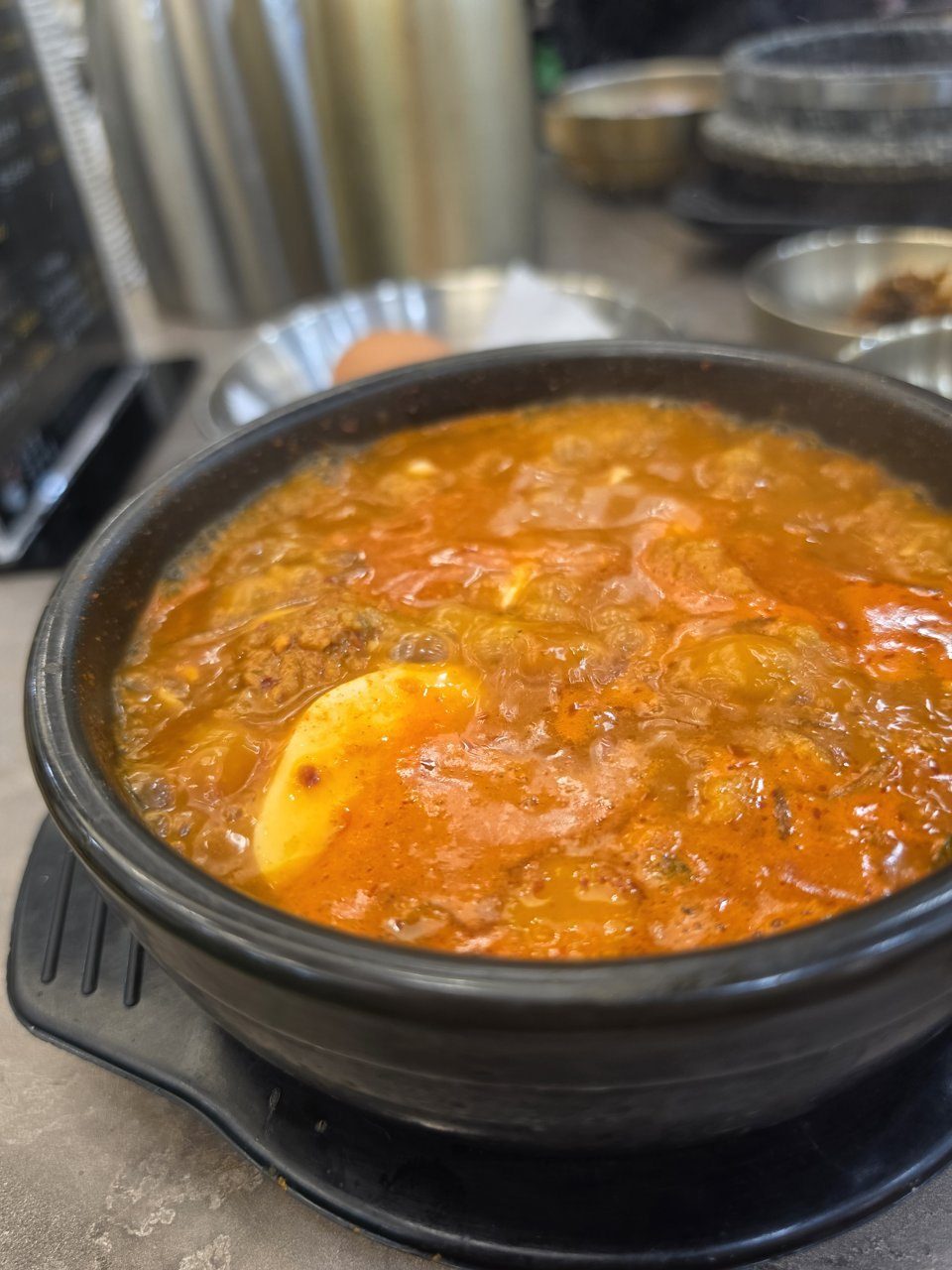
Many stews come in a ttukbaegi, a heavy black earthenware pot that holds heat for a long time. It is set on a plastic or wooden tray because the pot itself is far too hot to touch. Expect the broth to keep bubbling for several minutes after it lands in front of you.
A red broth usually means gochugaru (chili flakes) or gochujang (chili paste). Common versions include soft tofu stew (sundubu jjigae), kimchi stew (kimchi jjigae) and soybean paste stew (doenjang jjigae), which is brown rather than red. Many places add tofu, minced or sliced pork, seafood or vegetables, and some put a raw egg on the side for you to crack into the hot broth yourself.
How the Meal Works at the Table
A stew is almost always served with a bowl of steamed rice and several small side dishes called banchan. These are included and usually refillable, so do not hesitate to ask for more of the one you like. Cutlery is often in a drawer built into the table or in a box on top of it, along with napkins.
- Use the spoon for broth and rice, and chopsticks for side dishes and solid pieces.
- Spoon some broth over your rice or dip rice into the pot; both are normal.
- Water is usually self-service from a dispenser or a jug on the table.
- Many restaurants have a tablet or a bell on the table for ordering and calling staff.
- Payment is usually at the counter by the door when you leave.
Stews are typically ordered per person, so a table for one is completely ordinary at lunchtime. Office workers eat this way every weekday, and you will rarely be the only person dining alone.
Stir-Fries and Sizzling Plates
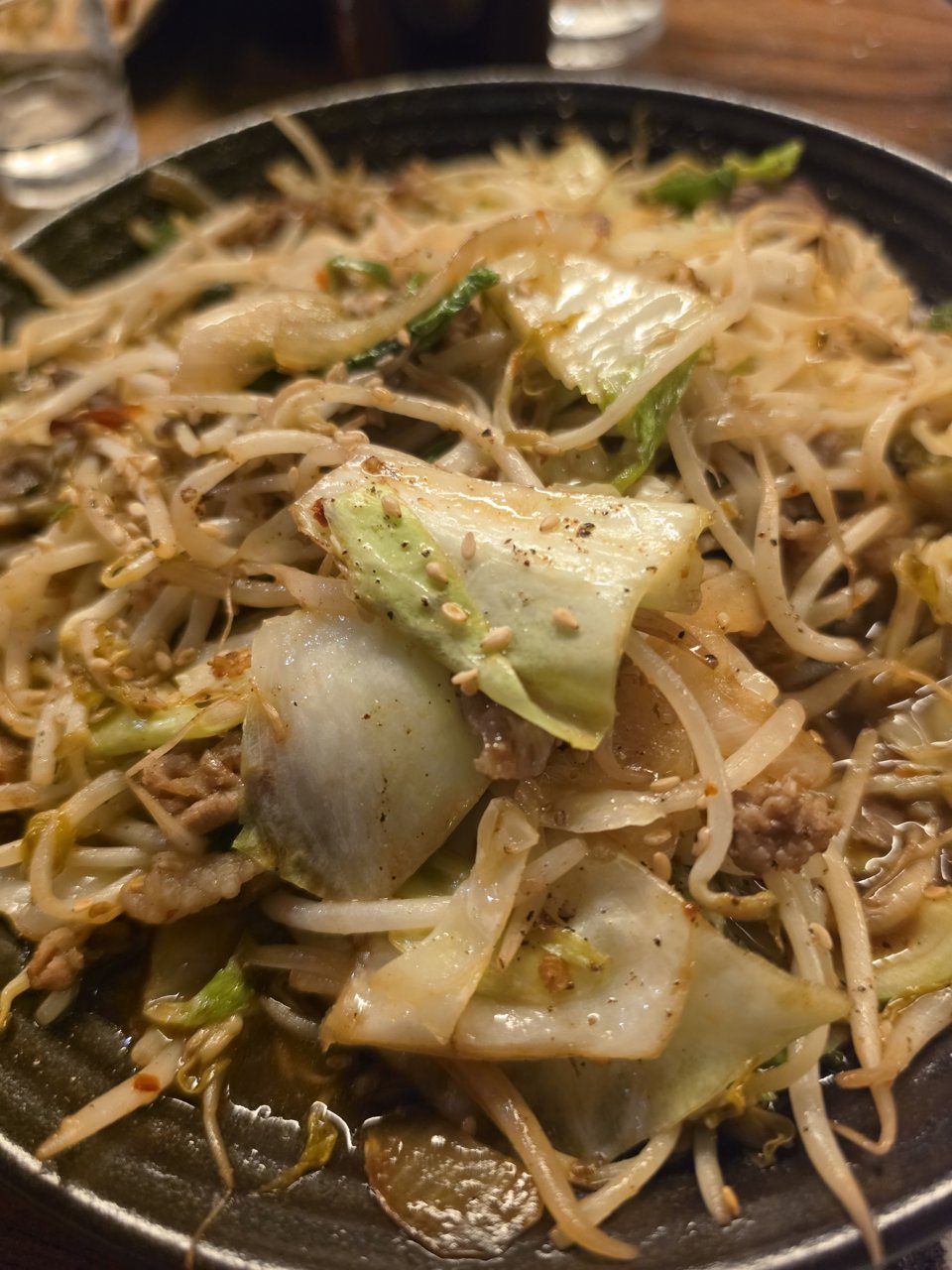
The other half of everyday Korean cooking is the stir-fry: thin meat tossed with bean sprouts, cabbage, onion and spring onion, finished with sesame seeds and black pepper. Bean sprouts are cheap and crunchy, so they appear in a huge number of dishes, from simple side dishes to big shared plates.
Be aware that some stir-fries, especially those cooked on a hot plate at the table, are designed for two or more people. If the menu lists a minimum order, ask whether a single portion is possible, or choose a set meal. Pointing at a photo on the menu works well if you do not read Korean. For a closer look at one classic, see our guide to Jeyuk Bokkeum in Busan.
Spice, Heat and Ordering Phrases
Red does not always mean fiery, but Korean stews can be hotter than they look. Some places let you choose a spice level; if not, ask for it less spicy. A few short phrases help:
- Han-geureut juseyo: one portion, please.
- Deol maepge juseyo: less spicy, please.
- Igeo jom deo juseyo: a bit more of this, please (for side dishes).
- Gyesan-hal-gyeyo: I'd like to pay.
Take the first spoonful slowly. The pot and broth stay extremely hot, and a quick sip of water or a bite of plain rice between mouthfuls makes the heat much easier. For more regional dishes worth trying, browse What to Eat in Busan.
Finding a Stew for Dinner, and the Evening After
Stew restaurants are everywhere: around subway stations, in busy districts such as Seomyeon, near universities and along office streets. Look for windows with photos of black pots and red broth. Small local places are generally well lit and full of people, which makes them comfortable for a solo woman even in the evening.
A warm stew is often the perfect end to a day of climbing hillside streets or walking the beachfront, when your legs feel heavy and your shoulders ache from carrying a day bag. Back in a quiet hotel room, it can still be hard to properly switch off on your own. On nights like that, some calm body care right there in the room starts to sound very nice.
Tired after a long day of travel?
If a full day of walking around Busan has left you worn out, a quiet hour of women-only aroma body care in your hotel room is one way to end the day. TODAK is for women guests only, and our therapists are men who provide professional body care only. Please message us in advance — there is no deposit, and you pay in cash (Korean won) on the day.