In this guide
Busan is a port city, and much of its food culture is built around what comes out of the sea each morning. One of the most memorable ways to taste it is a raw seafood platter: small bowls of shellfish, shrimp and sliced fish arranged on ice, surrounded by sauces, rice and side dishes. This guide explains what you are likely to find on such a platter, how to eat it, and how to turn the meal into a relaxed evening that ends with a drink by the window, even if it is raining.
What Is on a Busan Raw Seafood Platter
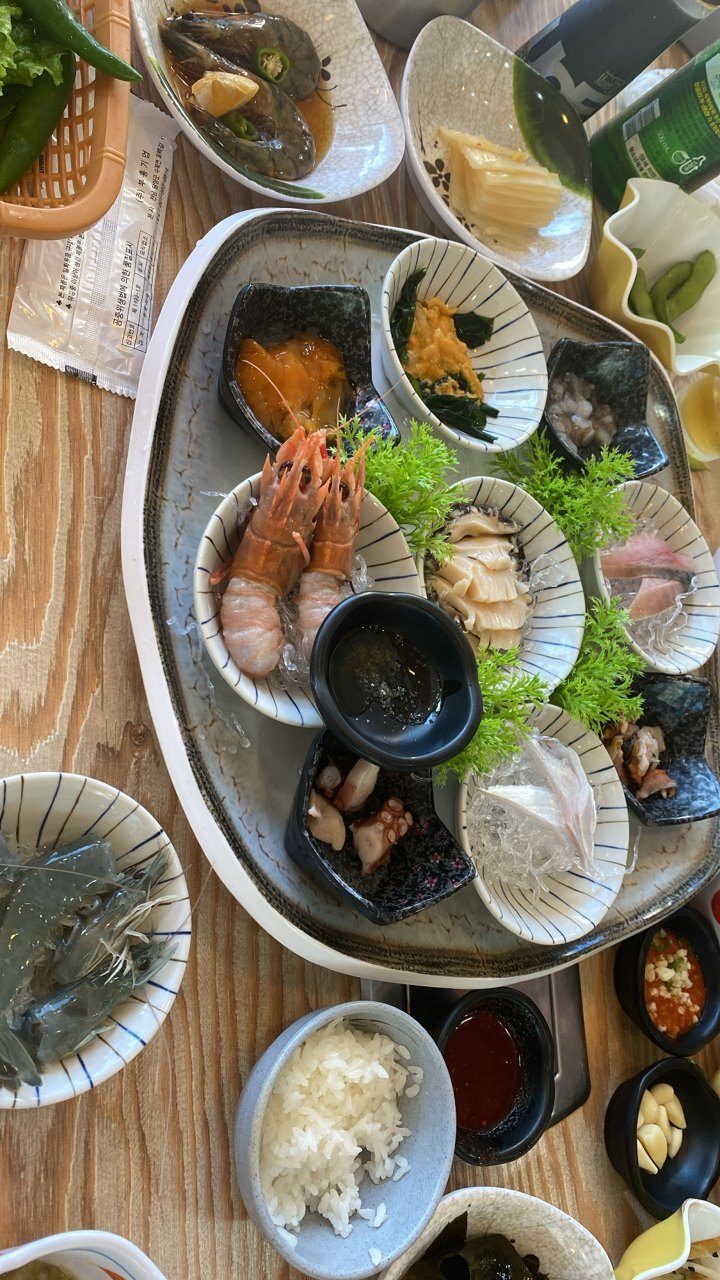
In Korean, sliced raw fish is called hoe, and a mixed platter often goes well beyond fish. A typical spread groups each item in its own little dish so you can taste them one by one. The selection changes with the season and with what the kitchen has that day, so do not expect the same platter twice.
- Sweet shrimp: long, pale pink prawns served raw with the heads on. The flesh is soft and slightly sweet.
- Abalone: sliced thin, with a firm, crunchy bite and a clean taste of the sea.
- Sea urchin (seonggye): bright orange, creamy and rich, sometimes served on a bed of seaweed.
- Octopus: cut into small pieces, often lightly blanched, and chewy rather than slippery.
- Sliced white fish: thin, translucent pieces laid over ice, mild in flavour.
- Conch or sea squirt: firmer textures with a stronger, briny taste for the curious eater.
Around the main platter you will usually see a basket of lettuce and perilla leaves, green chillies, sliced garlic, pickled radish and edamame or other small side dishes. Raw shrimp marinated in soy sauce, sometimes with lemon and chilli, is also popular and often arrives as a separate dish.
How to Eat It the Korean Way
There is no strict rule, but a few habits will help you enjoy the meal. Start with the mildest items, such as white fish, then move to richer ones like sea urchin. That way the delicate flavours are not lost.
Three sauces usually appear. Soy sauce with wasabi suits fish and abalone. Chogochujang, a sweet and tangy red chilli sauce, is the classic Korean partner for raw seafood and works well with octopus and shellfish. Sesame oil with salt is often paired with richer items. Try a bite of each item with different sauces and see what you like.
To make a ssam, place a lettuce or perilla leaf in your palm, add a piece of seafood, a little sauce, a slice of garlic or chilli if you like heat, and fold it into one bite. A bowl of plain rice helps balance the saltier marinated dishes, and many people finish the meal with a spicy fish soup made from the leftover bones. For a wider look at local dishes, see our guide on what to eat in Busan.
Ordering Seafood as a Solo Traveller
Raw seafood restaurants often price platters for two or more, which can feel awkward when you are alone. Look for places that list smaller sets or a single-portion option on the menu, or visit at lunchtime when set meals are more common. Market-style areas such as the streets around Jagalchi Market are good for browsing, as many places display their seafood in tanks and plates out front.
Picture menus and pointing work well. Saying the dish name and holding up one finger is usually understood. Water, side dishes and refills of leaves are normally free, and you can ask for more with a simple gesture. Tipping is not expected in Korea.
After Dinner: A Drink With a Night View
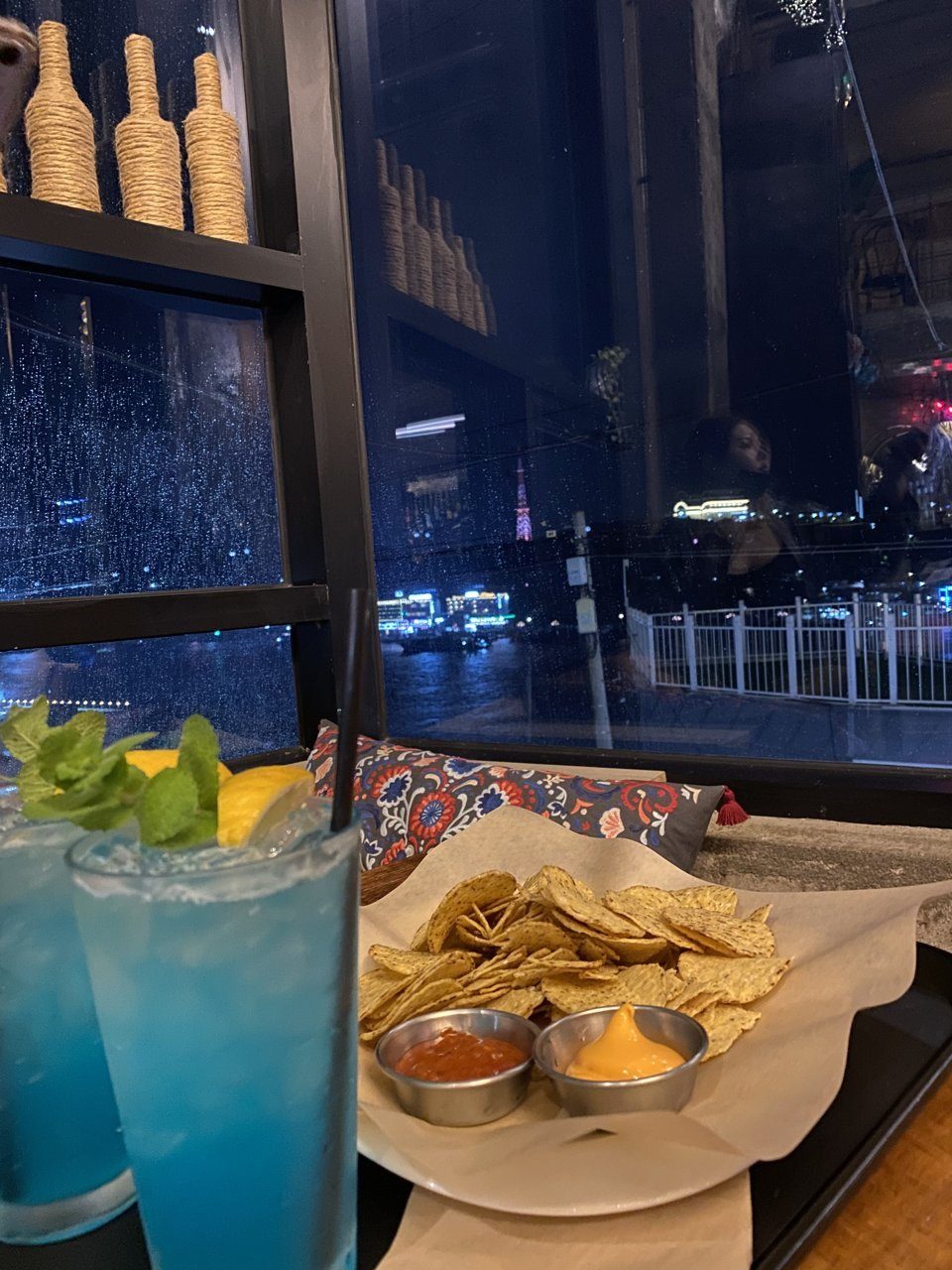
Busan's waterfront neighbourhoods come alive after dark, and many bars and cafes have large windows facing the harbour or the beach. Even on a rainy night, the view can be beautiful: city lights blur on the wet glass, towers glow in colour and boats move slowly across the dark water.
Cocktail bars often serve simple snacks such as tortilla chips with salsa and cheese sauce, fries or dried fruit, which makes them an easy, light stop after a big seafood meal. Bright, sweet cocktails with lemon and mint are common, and most places also offer alcohol-free drinks if you would rather keep a clear head. If the weather turns, our guide to what to do in Busan on a rainy day has more indoor ideas.
Practical Tips for the Evening
- Choose a window seat early in the evening, as these fill up first on weekends.
- Carry a compact umbrella; Busan weather near the sea can change quickly, especially in summer.
- Use the subway or a taxi app to get back; the subway runs until late evening and taxis are easy to find in busy areas.
- Stay in well-lit, lively streets when walking at night, and keep your drink with you.
- Have your hotel address saved in Korean to show a taxi driver.
A seafood dinner followed by a quiet drink by the water is one of the simplest pleasures Busan offers. After a long day of eating and walking, it is worth heading back early enough to rest well in your hotel before the next morning's adventures.
Tired after a long day of travel?
If a full day of walking around Busan has left you worn out, a quiet hour of women-only aroma body care in your hotel room is one way to end the day. TODAK is for women guests only, and our therapists are men who provide professional body care only. Please message us in advance — there is no deposit, and you pay in cash (Korean won) on the day.