In this guide
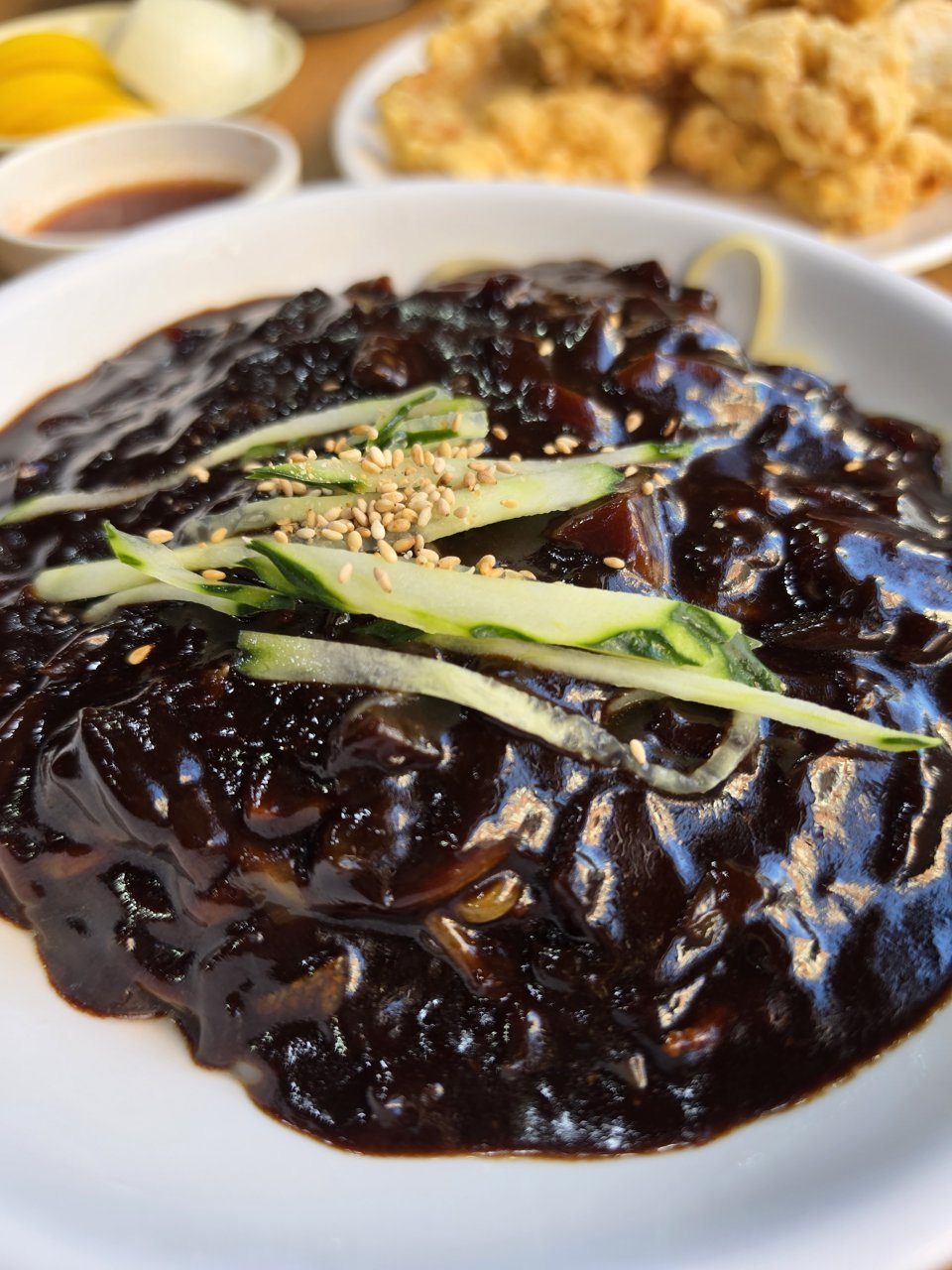
A shiny bowl of jjajangmyeon, a plate of golden fried pieces, small dishes of yellow pickled radish and raw onion on the side: this is one of the most familiar meals in Korea. Korean-Chinese food, called junggukjip food after the neighbourhood restaurants that serve it, is comfort eating for almost everyone who grew up here. For a traveller in Busan it is also one of the easiest, most relaxed meals to sit down to alone.
What Jjajangmyeon Actually Is
Jjajangmyeon is thick wheat noodles covered in a sauce made from chunjang, a dark fermented black bean paste, stir-fried with onion, pork and often zucchini or cabbage. The sauce is savoury and slightly sweet rather than spicy, which makes it a gentle choice if Korean chilli has been a lot for you so far.
The thin cucumber strips and sesame seeds on top are a fresh finishing touch. Before you eat, take your chopsticks and mix everything thoroughly until each noodle is coated. Do not worry about looking neat; the sauce stains easily, so a pale top is worth keeping clear of the bowl.
On most menus you will see a few variations worth knowing:
- Jjajangmyeon: the standard version, sauce already poured over the noodles.
- Gan-jjajang: the sauce is stir-fried fresh without starch and served separately, usually drier and more aromatic.
- Jjamppong: the other half of the classic pair, a red, spicy seafood and vegetable noodle soup.
- Jjajangbap or japchae-bap: rice versions if you would rather skip noodles.
- Bokkeumbap: fried rice, often served with a little jjajang sauce and a bowl of soup.
The Crispy Side Plate
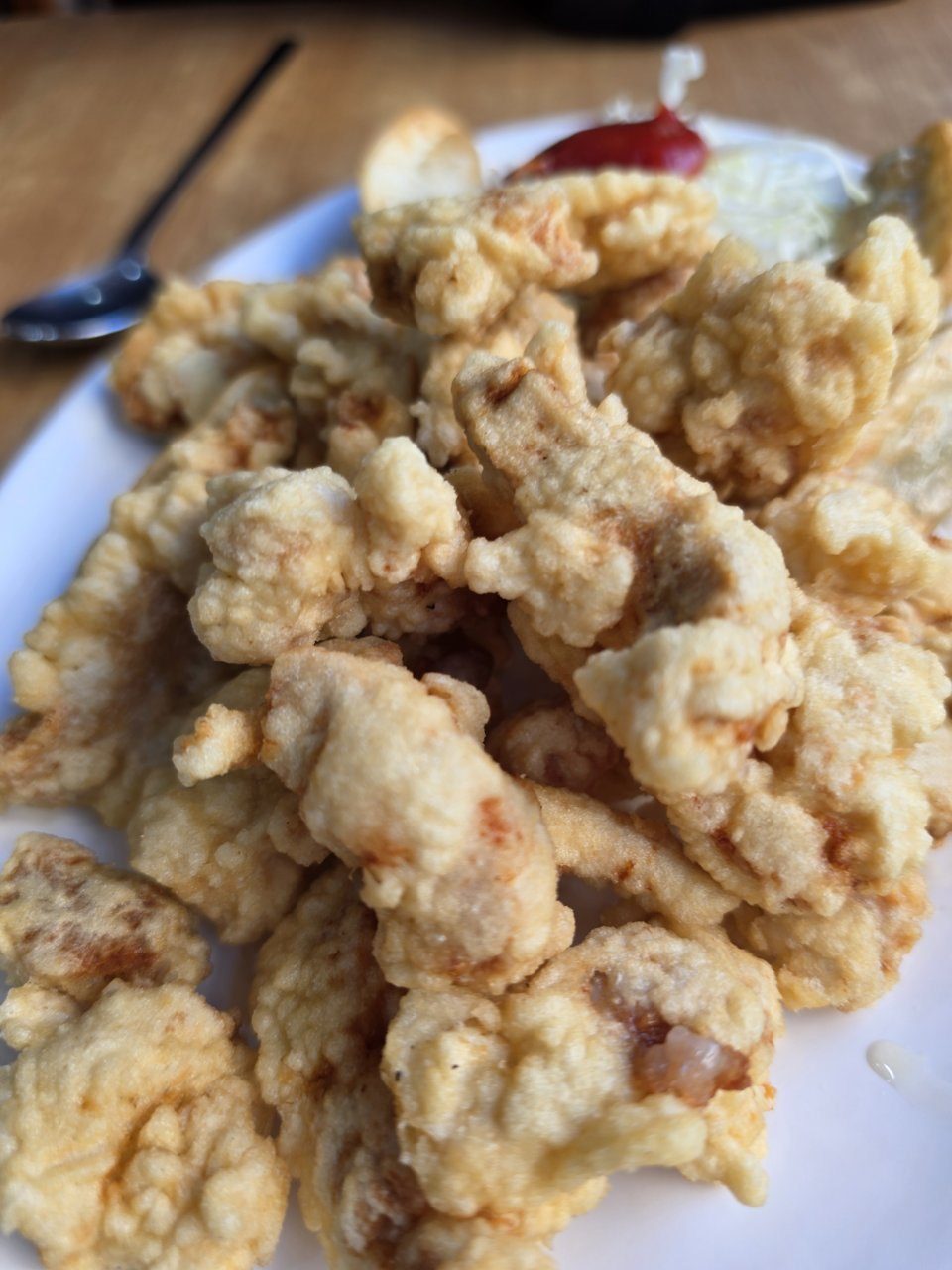
Noodles alone are a full meal, but many people add something fried to share. The plate in these photos is crispy fried chicken in a light batter, served with a dipping sauce. On Korean-Chinese menus the best-known fried dish is tangsuyuk, battered pork with a sweet and sour sauce, and there are spicier garlic-and-chilli fried dishes too.
Koreans happily argue about whether the sauce should be poured over the fried pieces or kept on the side for dipping. If you are sharing, it is polite to ask before pouring. Eating alone, the choice is all yours, and dipping keeps the batter crunchy longer.
If you want to understand the very different world of Korean fried chicken shops, with their own sauces and ordering habits, see Korean Fried Chicken in Busan.
Eating Alone Without Feeling Awkward
Korean-Chinese restaurants are some of the friendliest places in Korea for a solo diner. A single bowl of noodles is a completely normal order, and workers on a lunch break eat this way every day. Meals arrive quickly, and nobody expects you to linger.
Fried dishes are usually sized for two or more, but some places offer a smaller portion, so it is worth asking or checking the menu. Leftovers can often be packed to take away. Pickled radish, raw onion and black bean paste for dipping are free side dishes, and refills are normal; many places have a self-service corner or you can simply ask.
Where to Look in Busan
You do not need to search hard. Almost every residential street and market area in Busan has a Korean-Chinese restaurant, and they are common near subway stations in districts like Seomyeon and around Busan Station. Look for menus listing jjajangmyeon and jjamppong at the door.
For a little atmosphere, the Chinatown area across the road from Busan Station, in the Choryang neighbourhood, has a cluster of Chinese and Korean-Chinese restaurants alongside the old port streets. It is easy to reach by KTX or on subway Line 1, so it fits well on an arrival or departure day. For more local dishes to plan around, our What to Eat in Busan guide has a wider list.
Many of these restaurants also deliver, which is a big part of Korean food culture. If your accommodation allows it and you have a delivery app set up, a bowl of jjajangmyeon arriving at your door is a very local evening.
After the Meal
Jjajangmyeon is filling, and it often ends up being the meal you eat after a long stretch on your feet, between the station, the hills of the old port and the subway transfers. By evening your legs may feel heavy and your shoulders stiff from carrying a bag all day, and unwinding alone in a quiet hotel room is not always easy. On a day like that, some quiet body care in the room would feel nice.
Tired after a long day of travel?
If a full day of walking around Busan has left you worn out, a quiet hour of women-only aroma body care in your hotel room is one way to end the day. TODAK is for women guests only, and our therapists are men who provide professional body care only. Please message us in advance — there is no deposit, and you pay in cash (Korean won) on the day.